

€ 90,26 Gratis verzending

Uitgelicht
|
|
90,26 |
Naar shop
|

|
90,26 |
Naar shop
|

|
98,60 |
Naar shop
|
| VERGELIJK ALLE AANBIEDERS (3) | ||
 Beschrijving
Vergelijk aanbieders (3)
€ 90,26 Gratis verzending
€ 90,26 Gratis verzending
€ 98,60 Gratis verzending
Winkels met andere maten
Beschrijving
(1)
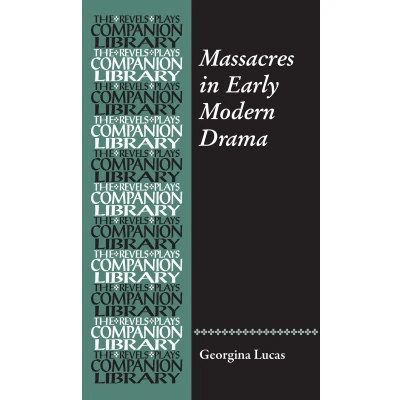
This book analyses the dynamically ambivalent meanings constructed by the language and action of massacre on the early modern stage. Informed by theories drawn from massacre studies, the monograph challenges orthodoxies about senseless violence, illuminates archaic forms of massacres, and attests to their brutally diverse stage representations. Massacres in Early Modern Drama analyses the dynamically ambivalent meanings constructed by the language and action of massacre on the early modern stage. Informed by theories drawn from massacre studies, the book challenges orthodoxies about senseless violence, illuminates archaic forms of massacre, and attests to their brutally diverse stage representations.Massacres scarred the early modern period. Its wars – civil, religious, and colonial – were each impelled, attended, or characterised by massacres. This violence intersected with some of the gravest political questions of the age. What is (who counts as) a human? What makes (and unmakes) a king? What makes (and breaks) a state? Do wars have rules, and to whom do they (or do they not) apply? Massacres in Early Modern Drama explores these questions by analysing the ways in which massacres expose the contingency of three different concepts: humanness, statehood, and war.Anchored by the contention that the St Bartholomew’s Day massacre in Paris in 1572 was instrumental to early modern understandings of massacre, the book uses this atrocity, and its most famous dramatic depiction – Christopher Marlowe’s The Massacre at Paris – as a hook to examine larger concerns about massacre in plays by Robert Greene, George Chapman, John Fletcher, and William Shakespeare. In doing so, this valuable study considers how early modern drama forms part of a continual cultural process of trying to piece together the contentious and traumatic phenomenon of massacre. Massacres in Early Modern Drama analyses the dynamically ambivalent meanings constructed by the language and action of massacre on the early modern stage. Informed by theories drawn from massacre studies, the monograph challenges orthodoxies about senseless violence, illuminates archaic forms of massacres, and attests to their brutally diverse stage representations.Anchored by the contention that the St Bartholomew’s Day Massacre in Paris (1572) was instrumental to early modern understandings of massacre, the book uses this atrocity, and its most famous dramatic depiction – Christopher Marlowe’s The Massacre at Paris – as a hook to explore larger concerns about massacre in plays by Robert Greene, George Chapman, John Fletcher, and William Shakespeare.Thus, Massacres in Early Modern Drama considers how early modern drama forms part of a continual cultural process of trying to piece together the contentious and traumatic phenomenon of massacre.
 Prijshistorie
 * Prijshistorie bevat geen data van Amazon, Amazon Marketplace.
Prijzen voor het laatst bijgewerkt op:
 Gerelateerde resultaten
 Productspecificaties


