


€ 78,88 Gratis verzending

Uitgelicht
|
|
78,88 |
Naar shop
|

|
84,52 |
Naar shop
|
| VERGELIJK ALLE AANBIEDERS (2) | ||
 Beschrijving
Vergelijk aanbieders (2)
€ 78,88 Gratis verzending
€ 84,52 € 3,14 verzendkosten Totaal € 87,66
Winkels met andere maten
Beschrijving
(1)
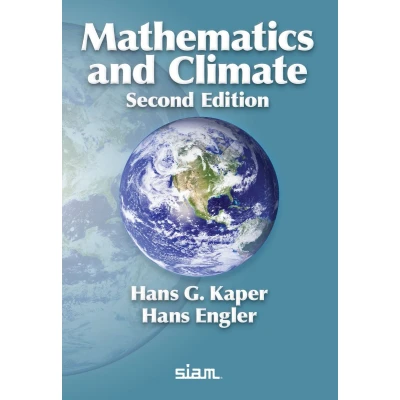
Exploring Earth’s climate through conceptual models and applied mathematics, the work employs dynamical systems, Fourier analysis, and statistics to unravel energy balances, ocean currents, glaciation cycles, and paleoclimate patterns. Engaging exercises prompt deeper critical insight. Winner of the Atmospheric Science Librarians International Choice Award as the best book of 2013, Mathematics and Climate emphasizes conceptual models that capture critical components of Earth's climate system and answers how and why certain phenomena happen. These models (energy balance-models and temperature distributions, ocean circulation patterns, ice caps and glaciation cycles, etc.) are used to introduce methods from applied mathematics, with emphasis on dynamical systems, bifurcation and stability theory, Fourier analysis, and statistics, including regression analysis and extreme value theory. Updated to reflect progress in the discipline, the Mathematics and Climate, Second Edition contains a layered atmosphere model for the greenhouse effect, a new chapter on a model for glacial cycles, and updated sections on paleoclimate reconstruction; includes exercises at the end of each chapter to stimulate critical thinking and communication skills; and provides suggestions for further study and more advanced projects, an extensive list of references, and a glossary of terms for the nontechnical reader.
 Productspecificaties
| EAN |
|
|---|---|
| Maat |
|
 Prijshistorie
* Prijshistorie bevat geen data van Amazon.
Prijzen voor het laatst bijgewerkt op:
 Gerelateerde resultaten


