


€ 66,90 Gratis verzending

Gesponsorde links
|
|
66,90 |
Naar shop
|

|
74,08 |
Naar shop
|

|
74,08 |
Naar shop
|
| VERGELIJK ALLE AANBIEDERS (3) | ||
 Beschrijving
Vergelijk aanbieders (3)
Gesponsorde links · Sommige shops betalen ons een vergoeding
€ 66,90 Gratis verzending
€ 74,08 Gratis verzending
€ 74,08 Gratis verzending
Winkels met andere maten
Beschrijving
(1)
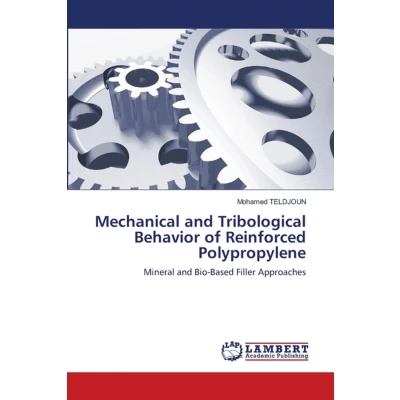
Polypropylene (PP) is widely used in engineering applications due to its low density, chemical resistance, processability and favorable cost-to-performance ratio. This book investigates the mechanical and tribological behavior of PP composites containing talc and almond-shell particles, with emphasis on filler content and particle size.The first system consists of PP filled with 5, 10, and 50 wt.% talc and tested under dry reciprocating sliding against steel. Friction, wear, and worn-surface morphology are analyzed at different sliding durations. Low and intermediate talc contents provide relatively stable friction, whereas 50 wt.% talc causes pronounced friction fluctuations and increased wear, with adhesive interaction, plowing, micro-cutting, debris formation, third-body abrasion, and localized delamination observed.The second system uses 5, 10, and 15 wt.% almond-shell particles with sizes of 600-900 and 400-600 ¿m. Almond-shell incorporation increases hardness and tensile modulus, while tensile strength and ultimate strain decrease. Particle size and content significantly affect friction and wear, with the D2-15 formulation providing a favorable balance of stiffness and wear.
 Prijshistorie
* Prijshistorie bevat geen data van Amazon, Amazon Marketplace.
Prijzen voor het laatst bijgewerkt op:
 Gerelateerde resultaten
 Productspecificaties


