


€ 115,00 Gratis verzending

Uitgelicht
|
|
115,00 |
Naar shop
|
| VERGELIJK ALLE AANBIEDERS (1) | ||
 Beschrijving
Vergelijk aanbieders (1)
€ 115,00 Gratis verzending
Winkels met andere maten
Beschrijving
(1)
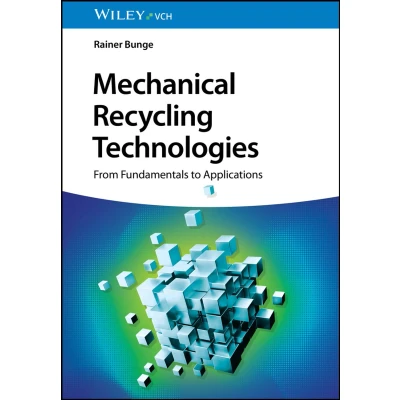
A systematic guide to mechanical recycling—from particle properties to plant design and operation Mechanical recycling separates, concentrates, and upgrades material streams while largely preserving their chemical composition. Mechanical Recycling Technologies: From Fundamentals to Applications combines the scientific and engineering foundations of mechanical processing with practical examples, fully worked calculations, and examination-style problems. It places the individual unit operations within the broader context of the circular economy. The book develops the subject systematically, beginning with particle properties, material flow analysis, and the behavior of bulk solids. It then covers comminution, classification, and the major sorting processes used in industrial recycling. The final chapters address the design, construction, commissioning, and operation of recycling plants. Step-by-step calculations and detailed solutions help readers translate theory into engineering practice. Readers will find: A concise introduction to waste management, resource conservation, and the circular economy Detailed treatment of particle characterization, liberation, material flow balancing, and bulk solids behavior The scientific foundations and practical application of industrial separation processes Fully worked examples with step-by-step solutions Examination-style problems for independent study and self-assessment Practical guidance on recycling plant design, commissioning, operation, and throughput optimization Written for bachelor’s and master’s students in environmental, mechanical, and process engineering, as well as engineers and practitioners in the recycling industry, this textbook provides a structured path from fundamental principles to plant-level application. A systematic guide to mechanical recycling—from particle properties to plant design and operation Mechanical recycling separates, concentrates, and upgrades material streams while largely preserving their chemical composition. Mechanical Recycling Technologies: From Fundamentals to Applications combines the scientific and engineering foundations of mechanical processing with practical examples, fully worked calculations, and examination-style problems. It places the individual unit operations within the broader context of the circular economy. The book develops the subject systematically, beginning with particle properties, material flow analysis, and the behavior of bulk solids. It then covers comminution, classification, and the major sorting processes used in industrial recycling. The final chapters address the design, construction, commissioning, and operation of recycling plants. Step-by-step calculations and detailed solutions help readers translate theory into engineering practice. Readers will find: A concise introduction to waste management, resource conservation, and the circular economy Detailed treatment of particle characterization, liberation, material flow balancing, and bulk solids behavior The scientific foundations and practical application of industrial separation processes Fully worked examples with step-by-step solutions Examination-style problems for independent study and self-assessment Practical guidance on recycling plant design, commissioning, operation, and throughput optimization Written for bachelor’s and master’s students in environmental, mechanical, and process engineering, as well as engineers and practitioners in the recycling industry, this textbook provides a structured path from fundamental principles to plant-level application.
 Productspecificaties
| EAN |
|
|---|---|
| Maat |
|
 Prijshistorie
 Prijzen voor het laatst bijgewerkt op:
 Gerelateerde resultaten


