


gebruikt € 29,30 Gratis verzending

Uitgelicht
|
|
29,30 |
Naar shop
|

|
136,00 |
Naar shop
|
| VERGELIJK ALLE AANBIEDERS (2) | ||
 Beschrijving
Vergelijk aanbieders (2)
gebruikt € 29,30 Gratis verzending
€ 136,00 Gratis verzending
Winkels met andere maten
Beschrijving
(2)
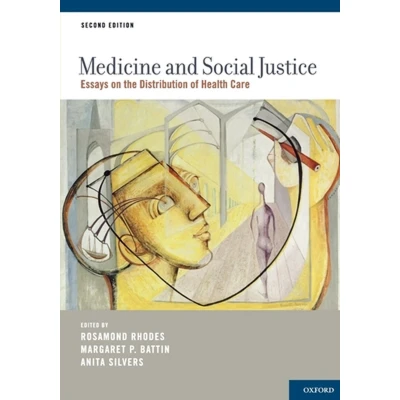
This unique and comprehensive second edition of an important volume presents writing from renowned authors about achieving social justice in medicine. Each of the 42 chapters addresses continuing and emerging policy challenges facing medicine. They deepen our understanding of theoretical and practical aspects of issues in the contemporary debate. Because medicine can preserve life, restore health and maintain the body's functions, it is widely acknowledged as a basic good that just societies should provide for their members. Yet, there is wide disagreement over the scope and content of what to provide, to whom, how, when, and why. In this unique and comprehensive volume, some of the best-known philosophers, physicians, legal scholars, political scientists, and economists writing on the subject discuss what social justice in medicine should be. Their contributions deepen our understanding of the theoretical and practical issues that run through the contemporary debate. The forty-two chapters in this reorganized second edition of Medicine and Social Justice update and expand upon the thirty-four chapters of the 2002 first edition. Eighteen chapters from the original volume are revised to address policy changes and challenging issues that have emerged in the intervening decade. Twenty-two of the chapters in this edition are entirely new. The treatment of foundational theory and conceptual issues related to access to health care and rationing medical resources have been expanded to provide a more comprehensive and nuanced discussion of the background concepts that underlie distributive justice debates, with global perspectives on health and well-being added. New additions to the section on health care justice for specific populations include chapters on health care for the chronically ill, soldiers, prisoners, the severely cognitively disabled, and the LGBT population. The section devoted to dilemmas and priorities addresses an array of topics that have recently become especially pressing because of new technologies or altered policies. New chapters address questions of justice related to genetics, medical malpractice, research on human subjects, pandemic and disaster planning, newborn screening, and justice for the brain dead and those with profound neurological injury. Reviews of the first edition: "This compilation brings a variety of perspectives, national settings, and disciplinary backgrounds to the topic and provides a unique survey of theoretical and applied thinking about the connections between health care and social justice... Physicians and others interested in this field will find this book an engaging introduction to the theoretical and practical challenges pertaining to social justice and health care." New England Journal of Medicine "Although much work in bioethics has focused on clinical encounters, there has been a current of discussion about questions of social justice for decades-at least since the allocation of access to dialysis was widely understood in the 1960s to be a matter of justice, not of medical judgment. This volume will facilitate heightened awareness and deeper discussion of such issues." JAMA "Impressively, the editors have chosen an array of essays that explore the philosophical and bioethical foundations of distributive justice; review the current practice of rationing and patients' access to care in a number of different countries; highlight the issues raised by various special needs groups; and then wrestle with some dilemmas in assessing priorities in distributing healthcare... This book is an excellent resource. " Doody's
Bol PartnerBecause medicine can preserve and restore health and function, it has been widely acknowledged as a basic good that a just society should provide its members. Yet there is wide disagreement over the scope of what is to be provided, to whom, how, when and why. In this uniquely comprehensive book some of the best-known philosophers, doctors, lawyers, political scientists, and economists writing on the subject discuss the concerns and deepen our understanding of the theoretical and practical issues that run through the contemporary debate. The first section lays a broad theoretical basis for understanding the subject of justice, particularly as it relates to the distribution of health care. The second section critically examines how medical care is distributed in different countries around the world and the particular advantages and injustices associated with those systems. The third section draws attention to the special needs of different social groups and the specific issues of justice that are raised by the impact of various policies on health care distribution. The concluding section delves into the dilemmas that confront those designing health care systems - the politics, the priorities, and the place of desires as opposed to needs in a socially just scheme.
 Productspecificaties
| EAN |
|
|---|---|
| Maat |
|
 Prijshistorie
 Prijzen voor het laatst bijgewerkt op:
 Gerelateerde resultaten


