

€ 10,99 Gratis verzending

Gesponsorde links
|
|
10,99 |
Naar shop
|

|
10,99 |
Naar shop
|

|
10,99 |
Naar shop
|
| VERGELIJK ALLE AANBIEDERS (3) | ||
 Beschrijving
Vergelijk aanbieders (3)
Gesponsorde links · Sommige shops betalen ons een vergoeding
€ 10,99 Gratis verzending
€ 10,99 Gratis verzending
€ 10,99 € 2,99 verzendkosten Totaal € 13,98
Winkels met andere maten
Beschrijving
(1)
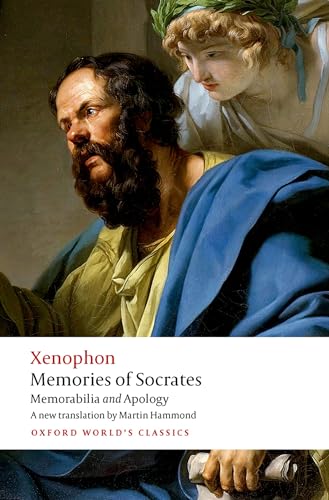
Xenophon's Memorabilia and Apology provide a passionate defence of Socrates against the charges brought against him that lead to his execution. The two texts together provide a moving account of what happened immediately before, during, and after his trial. 'Who would you say knows himself?' In 399 BCE Socrates was tried in Athens on charges of irreligion and corruption of the young, convicted, and sentenced to death. Like Plato, an almost exact contemporary, in his youth Xenophon (c. 430-c. 354 BCE) was one of the circle of mainly upper-class young Athenians attracted to Socrates' teaching. His Memorabilia is both a passionate defence of Socrates against those charges, and a kaleidoscopic picture of the man he knew, painted in a series of mini-dialogues and shorter vignettes, with a varied and deftly characterized cast--entitled and ambitious young men, atheists and hedonists, artists and artisans, Socrates' own stroppy teenage son Lamprocles, the glamorous courtesan Theodote. Topics given Socrates' characteristic questioning treatment include education, law, justice, government, political and military leadership, democracy and tyranny, friendship, care of the body and the soul, and concepts of the divine. Xenophon sees Socrates as above all a supreme moral educator, coaxing and challenging his associates to make themselves better people, not least by the example of how he lived his own life. Self-knowledge, leading to a reasoned self-control, was for Socrates the essential first step on the path to virtue, and some found it uncomfortable. The Apology is a moving account of Socrates' behaviour and bearing in his last days, immediately before, during, and after his trial.
 Prijshistorie
 * Prijshistorie bevat geen data van Amazon, Amazon Marketplace.
Prijzen voor het laatst bijgewerkt op:
 Gerelateerde resultaten
 Productspecificaties


