

€ 84,62 Gratis verzending

Gesponsorde links
|
|
84,62 |
Naar shop
|

|
87,90 |
Naar shop
|
| VERGELIJK ALLE AANBIEDERS (2) | ||
 Beschrijving
Vergelijk aanbieders (2)
Gesponsorde links · Sommige shops betalen ons een vergoeding
€ 84,62 Gratis verzending
€ 87,90 Gratis verzending
Winkels met andere maten
Beschrijving
(1)
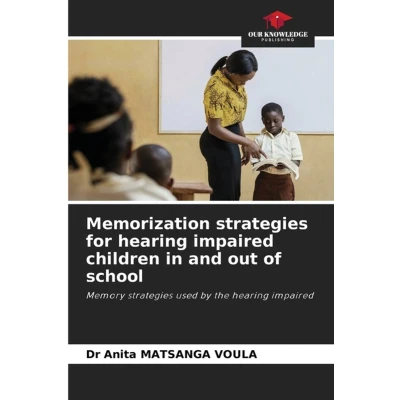
The aim of this study was to investigate the effect of different memorization strategies on the mnesic and perceptual-motor abilities of enrolled and unenrolled profoundly deaf children aged 8 to 14. One hundred and nine (109) profoundly deaf children, including 53 enrolled at the École Nationale pour Enfants Déficients Auditifs, and 56 unenrolled children living with their families. The Rey Complex Figure and the semi-structured interview were used as experimental tools. Analyses were processed using SPSS software, including chi-square, descriptive, linear regression and correlation analyses. The results show that school-educated profoundly deaf children, using memory strategies based on visuo-spatial elaboration and organization, and producing drawing types I, II and III, achieve high scores. Non-educated deaf children who rely on a mental rehearsal strategy and produce drawing types IV and V, show lower performance.
 Prijshistorie
* Prijshistorie bevat geen data van Amazon.
Prijzen voor het laatst bijgewerkt op:
 Gerelateerde resultaten
 Productspecificaties


