








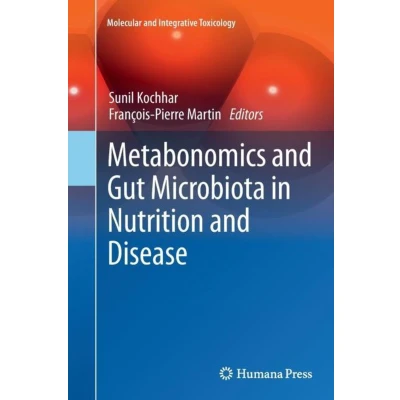
Metabonomics and Gut Microbiota in Nutrition Disease
Uitgelicht

|
103,03 |
Naar shop
|

|
103,03 |
Naar shop
|

|
105,00 |
Naar shop
|
 Beschrijving
Bol
This book provides a comprehensive overview of metabonomics and gut microbiota research from molecular analysis to population-based global health considerations. The topics include the discussion of the applications in relation to metabonomics and gut microbiota in nutritional research, in health and disease and a review of future therapeutical, nutraceutical and clinical applications. It also examines the translatability of systems biology approaches into applied clinical research and to patient health and nutrition. The rise in multifactorial disorders, the lack of understanding of the molecular processes at play and the needs for disease prediction in asymptomatic conditions are some of the many questions that system biology approaches are well suited to address. Achieving this goal lies in our ability to model and understand the complex web of interactions between genetics, metabolism, environmental factors, and gut microbiota. Being the most densely populated microbial ecosystem on earth, gut microbiota co-evolved as a key component of human biology, essentially extending the physiological definition of humans. Major advances in microbiome research have shown that the contribution of the intestinal microbiota to the overall health status of the host has been so far underestimated. Human host gut microbial interaction is one of the most significant human health considerations of the present day with relevance for both prevention of disease via microbiota-oriented environmental protection as well as strategies for new therapeutic approaches using microbiota as targets and/or biomarkers. In many aspects, humans are not a complete and fully healthy organism without their appropriate microbiological components. Increasingly, scientific evidence identifies gut microbiota as a key biological interface between human genetics and environmental conditions encompassing nutrition. Microbiota dysbiosis or variation in metabolic activity has been associated with metabolic deregulation (e.g. obesity, inflammatory bowel disease), disease risk factor (e.g. coronary heart disease) and even the aetiology of various pathologies (e.g. autism, cancer), although causal role into impaired metabolism still needs to be established. Metabonomics and Gut Microbiota in Nutrition and Disease serves as a handbook for postgraduate students, researchers in life sciences or health sciences, scientists in academic and industrial environments working in application areas as diverse as health, disease, nutrition, microbial research and human clinical medicine. This book provides a comprehensive overview of metabonomics and gut microbiota research from molecular analysis to population-based global health considerations. The topics include the discussion of the applications in relation to metabonomics and gut microbiota in nutritional research, in health and disease and a review of future therapeutical, nutraceutical and clinical applications. It also examines the translatability of systems biology approaches into applied clinical research and to patient health and nutrition. The rise in multifactorial disorders, the lack of understanding of the molecular processes at play and the needs for disease prediction in asymptomatic conditions are some of the many questions that system biology approaches are well suited to address. Achieving this goal lies in our ability to model and understand the complex web of interactions between genetics, metabolism, environmental factors and gut microbiota. Being the most densely populated microbial ecosystem on earth, gut microbiota co-evolved as a key component of human biology, essentially extending the physiological definition of humans. Major advances in microbiome research have shown that the contribution of the intestinal microbiota to the overall health status of the host has been so far underestimated. Human host gut microbial interaction is one of the most significant human health considerations of the present day with relevance for both prevention of disease via microbiota-oriented environmental protection as well as strategies for new therapeutic approaches using microbiota as targets and/or biomarkers. In many aspects, humans are not a complete and fully healthy organism without their appropriate microbiological components. Increasingly, scientific evidence identifies gut microbiota as a key biological interface between human genetics and environmental conditions encompassing nutrition. Microbiota dysbiosis or variation in metabolic activity has been associated with metabolic deregulation (e.g. obesity, inflammatory bowel disease), disease risk factor (e.g. coronary heart disease) and even the aetiology of various pathologies (e.g. autism, cancer), although causal role into impaired metabolism still needs to be established. Metabonomics and Gut Microbiota in Nutrition and Disease serves as a handbook for postgraduate students, researchers in life sciences or health sciences, scientists in academic and industrial environments working in application areas as diverse as health, disease, nutrition, microbial research and human clinical medicine.


 Beschrijving
(2)
Beschrijving
(2)
This book provides a comprehensive overview of metabonomics and gut microbiota research from molecular analysis to population-based global health considerations. The topics include the discussion of the applications in relation to metabonomics and gut microbiota in nutritional research, in health and disease and a review of future therapeutical, nutraceutical and clinical applications. It also examines the translatability of systems biology approaches into applied clinical research and to patient health and nutrition. The rise in multifactorial disorders, the lack of understanding of the molecular processes at play and the needs for disease prediction in asymptomatic conditions are some of the many questions that system biology approaches are well suited to address. Achieving this goal lies in our ability to model and understand the complex web of interactions between genetics, metabolism, environmental factors, and gut microbiota. Being the most densely populated microbial ecosystem on earth, gut microbiota co-evolved as a key component of human biology, essentially extending the physiological definition of humans. Major advances in microbiome research have shown that the contribution of the intestinal microbiota to the overall health status of the host has been so far underestimated. Human host gut microbial interaction is one of the most significant human health considerations of the present day with relevance for both prevention of disease via microbiota-oriented environmental protection as well as strategies for new therapeutic approaches using microbiota as targets and/or biomarkers. In many aspects, humans are not a complete and fully healthy organism without their appropriate microbiological components. Increasingly, scientific evidence identifies gut microbiota as a key biological interface between human genetics and environmental conditions encompassing nutrition. Microbiota dysbiosis or variation in metabolic activity has been associated with metabolic deregulation (e.g. obesity, inflammatory bowel disease), disease risk factor (e.g. coronary heart disease) and even the aetiology of various pathologies (e.g. autism, cancer), although causal role into impaired metabolism still needs to be established. Metabonomics and Gut Microbiota in Nutrition and Disease serves as a handbook for postgraduate students, researchers in life sciences or health sciences, scientists in academic and industrial environments working in application areas as diverse as health, disease, nutrition, microbial research and human clinical medicine. This book provides a comprehensive overview of metabonomics and gut microbiota research from molecular analysis to population-based global health considerations. The topics include the discussion of the applications in relation to metabonomics and gut microbiota in nutritional research, in health and disease and a review of future therapeutical, nutraceutical and clinical applications. It also examines the translatability of systems biology approaches into applied clinical research and to patient health and nutrition. The rise in multifactorial disorders, the lack of understanding of the molecular processes at play and the needs for disease prediction in asymptomatic conditions are some of the many questions that system biology approaches are well suited to address. Achieving this goal lies in our ability to model and understand the complex web of interactions between genetics, metabolism, environmental factors and gut microbiota. Being the most densely populated microbial ecosystem on earth, gut microbiota co-evolved as a key component of human biology, essentially extending the physiological definition of humans. Major advances in microbiome research have shown that the contribution of the intestinal microbiota to the overall health status of the host has been so far underestimated. Human host gut microbial interaction is one of the most significant human health considerations of the present day with relevance for both prevention of disease via microbiota-oriented environmental protection as well as strategies for new therapeutic approaches using microbiota as targets and/or biomarkers. In many aspects, humans are not a complete and fully healthy organism without their appropriate microbiological components. Increasingly, scientific evidence identifies gut microbiota as a key biological interface between human genetics and environmental conditions encompassing nutrition. Microbiota dysbiosis or variation in metabolic activity has been associated with metabolic deregulation (e.g. obesity, inflammatory bowel disease), disease risk factor (e.g. coronary heart disease) and even the aetiology of various pathologies (e.g. autism, cancer), although causal role into impaired metabolism still needs to be established. Metabonomics and Gut Microbiota in Nutrition and Disease serves as a handbook for postgraduate students, researchers in life sciences or health sciences, scientists in academic and industrial environments working in application areas as diverse as health, disease, nutrition, microbial research and human clinical medicine.
AmazonPagina's: 391, Editie: Softcover reprint of the original 1st ed. 2015, Paperback, Springer
 Productspecificaties
 Prijshistorie
* Prijshistorie bevat geen data van Amazon, Amazon Marketplace.
Prijzen voor het laatst bijgewerkt op:
 Gerelateerde resultaten


