


€ 36,99 Gratis verzending

Uitgelicht
|
|
36,99 |
Naar shop
|

|
37,40 |
Naar shop
|

|
37,40 |
Naar shop
|
| VERGELIJK ALLE AANBIEDERS (3) | ||
 Beschrijving
Vergelijk aanbieders (3)
€ 36,99 Gratis verzending
€ 37,40 Gratis verzending
€ 37,40 Gratis verzending
Winkels met andere maten
Beschrijving
(1)
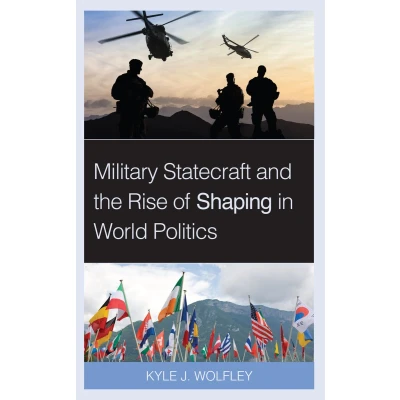
This book explores how changes in the structure of the international system and technology incentivize major powers to adopt different types of military power—either the traditional threat and use of force or “shaping” through the non-warfighting use of military organizations—to manage threats in world politics. Winner of the Andrew F. Krepinevich Writing AwardA 2022 Choice Reviews Outstanding Academic TitleSelected for the Irregular Warfare Initiative’s Inaugural Reading List (2022)In today’s complex international environment, how do the United States, China, and Russia manage the return of great power competition as well as the persistent threat of violent non-state actors? This book explores "shaping": the use of military power to construct a more favorable environment by influencing the characteristics of other militaries, altering the relationships between them, or managing the behavior of allies. As opposed to traditional strategies of warfighting or coercion, shaping relies less on threats, demonstrations, and uses of violence and more on attraction, persuasion, and legitimacy. Because shaping relies more on soft power than on hard power, this approach contradicts the conventional wisdom of the purpose militaries serve.Kyle J. Wolfley explores the emergence of shaping in classical strategy and its increased frequency following the end of the Cold War when threats and allies became more ambiguous. He illustrates the four logics of shaping—attraction, socialization, delegation, and assurance—through five case studies of recent major military exercise programs led by the United States, China, India, the United Kingdom, and Russia. Moreover, the author reveals through sentiment analysis and statistics of over one thousand multinational exercises from 1980 to 2016 how major powers reacted to a complex international environment by expanding the number and scope of shaping exercises. Illuminating an understudied but surprisingly common tool of military statecraft, this book offers a fresh understanding of military power in today's competitive international system.
 Prijshistorie
 * Prijshistorie bevat geen data van Amazon, Amazon Marketplace.
Prijzen voor het laatst bijgewerkt op:
 Gerelateerde resultaten
 Productspecificaties


