


€ 105,00 Gratis verzending

Uitgelicht
|
|
105,00 |
Naar shop
|

|
107,30 |
Naar shop
|
| VERGELIJK ALLE AANBIEDERS (2) | ||
 Beschrijving
Vergelijk aanbieders (2)
€ 105,00 Gratis verzending
€ 107,30 Gratis verzending
Winkels met andere maten
Beschrijving
(1)
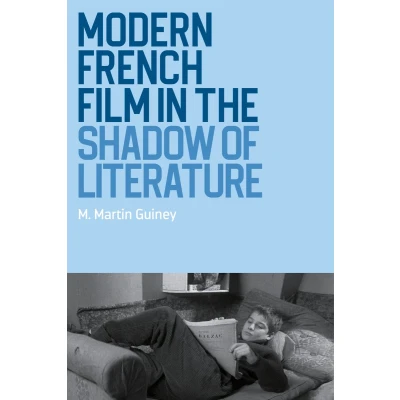
An examination of the alternately hostile and submissive attitudes from the 1950s of French filmmakers toward the institution of literature. Provides a theoretical analysis of words and images as distinct expressive mediums, discussions of the often-ambiguous representations of literary culture, reading, and writing within specific films. The underlying theme of this book is the ‘French exception’ in film production and its relation to the pre-existing institution of literature. Since the birth of ‘auteurism’ in the 1950s, there has been a tension among filmmakers between submission to the superiority of the written word and the promotion of film as an equal or superior means of artistic expression. To better understand this tension, the book starts with a description of the privileged status of literature in France, which functions in society as a kind of ‘secular religion.' Part I explores the use of spoken, written, and printed words in several films, whether as a way to compete with the precursor medium of literature, or to create experiments in ‘literature by other means.' Both tendencies emerge in the analyses of major works by Alain Resnais, Marguerite Duras, and François Truffaut, among others. Part II examines the film–literature relationship from a broader perspective, including the film industry’s commercial exploitation of literary works, the repeated representation of the ‘cult of literature’ in film, and the continued French tradition of collaboration between literary authors and filmmakers. More recently, the literature–film tension seems to have abated as ‘intermediality,' a relatively new concept in film theory, has relativised texts, films, and other forms of expression, thus subverting conventional cultural hierarchies. The final question is whether literature’s power as a source of cultural legitimacy is truly in decline within the French filmmaking community. This book argues for the power of literature as a secular religion within the French context, and the effect it has had on filmmakers as they challenge its cultural dominance. It examines the medium of literature – both printed and spoken words – as it is represented in a range of French films from the 1950s to the present. The chapters contain new interpretations of mid twentieth-century films by major directors such as Alain Resnais, Marguerite Duras, and François Truffaut, as well as more recent ones by Christophe Honoré, Régis Sauder, and Guillaume Nicloux. The analyses of individual films rely on a long tradition of theoretical and critical works that explore the film-literature relationship including, but not limited to, the fields of adaptation studies, auteur theory, and intermediality.
 Prijshistorie
 * Prijshistorie bevat geen data van Amazon.
Prijzen voor het laatst bijgewerkt op:
 Gerelateerde resultaten
 Productspecificaties


