
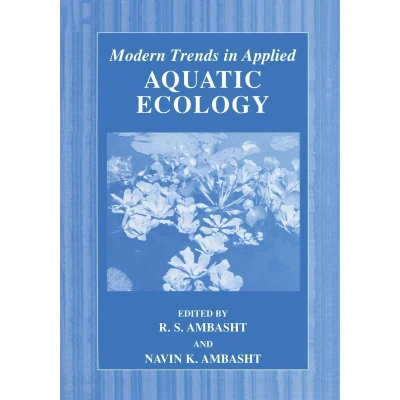
Modern Trends in Applied Aquatic Ecology
Uitgelicht

|
79,24 |
Naar shop
|

|
137,33 |
Naar shop
|
| VERGELIJK ALLE AANBIEDERS (2) | ||
 Beschrijving
Bol Partner
Over the millennia, from simple hunter-food gatherers, humans developed the art of agriculture, domestication of animals, identification of medicinal plants, devising hunting and fishing techniques, house building, and making clothes. Organisms and environment have evolved through modifying each other over millions of years. Humans appeared very late in this evolutionary time scale. With their superior brain attributes, humans emerged as the most dominating influence on the earth. Over the millennia, from simple hunter-food gatherers, humans developed the art of agriculture, domestication of animals, identification of medicinal plants, devising hunting and fishing techniques, house building, and making clothes. All these have been for better adjustment, growth, and survival in otherwise harsh and hostile surroundings and climate cycles of winter and summer, and dry and wet seasons. So humankind started experimenting and acting on ecological lines much before the art of reading, writing, or arithmetic had developed. Application of ecological knowledge led to development of agriculture, animal husbandry, medicines, fisheries, and so on. Modem ecology is a relatively young science and, unfortunately, there are so few books on applied ecology. The purpose of ecology is to discover the principles that govern relationships among plants, animals, microbes, and their total living and nonliving environmental components. Ecology, however, had remained mainly rooted in botany and zoology. It did not permeate hard sciences, engineering, or industrial technologies leading to widespread environmental degradation, pollution, and frequent episodes leading to mass deaths and diseases.


 Beschrijving
(2)
Beschrijving
(2)
Over the millennia, from simple hunter-food gatherers, humans developed the art of agriculture, domestication of animals, identification of medicinal plants, devising hunting and fishing techniques, house building, and making clothes. Organisms and environment have evolved through modifying each other over millions of years. Humans appeared very late in this evolutionary time scale. With their superior brain attributes, humans emerged as the most dominating influence on the earth. Over the millennia, from simple hunter-food gatherers, humans developed the art of agriculture, domestication of animals, identification of medicinal plants, devising hunting and fishing techniques, house building, and making clothes. All these have been for better adjustment, growth, and survival in otherwise harsh and hostile surroundings and climate cycles of winter and summer, and dry and wet seasons. So humankind started experimenting and acting on ecological lines much before the art of reading, writing, or arithmetic had developed. Application of ecological knowledge led to development of agriculture, animal husbandry, medicines, fisheries, and so on. Modem ecology is a relatively young science and, unfortunately, there are so few books on applied ecology. The purpose of ecology is to discover the principles that govern relationships among plants, animals, microbes, and their total living and nonliving environmental components. Ecology, however, had remained mainly rooted in botany and zoology. It did not permeate hard sciences, engineering, or industrial technologies leading to widespread environmental degradation, pollution, and frequent episodes leading to mass deaths and diseases.
BolOrganisms and environment have evolved through modifying each other over millions of years. Humans appeared very late in this evolutionary time scale. With their superior brain attributes, humans emerged as the most dominating influence on the earth. Over the millennia, from simple hunter-food gatherers, humans developed the art of agriculture, domestication of animals, identification of medicinal plants, devising hunting and fishing techniques, house building, and making clothes. All these have been for better adjustment, growth, and survival in otherwise harsh and hostile surroundings and climate cycles of winter and summer, and dry and wet seasons. So humankind started experimenting and acting on ecological lines much before the art of reading, writing, or arithmetic had developed. Application of ecological knowledge led to development of agriculture, animal husbandry, medicines, fisheries, and so on. Modem ecology is a relatively young science and, unfortunately, there are so few books on applied ecology. The purpose of ecology is to discover the principles that govern relationships among plants, animals, microbes, and their total living and nonliving environmental components. Ecology, however, had remained mainly rooted in botany and zoology. It did not permeate hard sciences, engineering, or industrial technologies leading to widespread environmental degradation, pollution, and frequent episodes leading to mass deaths and diseases.
 Productspecificaties
| EAN |
|
|---|---|
| Maat |
|
 Prijshistorie
Prijzen voor het laatst bijgewerkt op:
 Gerelateerde resultaten


