


€ 104,66 € 91,88 Gratis verzending

Uitgelicht
|
|
104,66
91,88 |
Naar shop
|

|
91,88 |
Naar shop
|

|
91,88 |
Naar shop
|
| VERGELIJK ALLE AANBIEDERS (3) | ||
 Beschrijving
Vergelijk aanbieders (3)
€ 104,66 € 91,88 Gratis verzending
€ 91,88 € 3,14 verzendkosten Totaal € 95,02
€ 91,88 € 3,14 verzendkosten Totaal € 95,02
Winkels met andere maten
Beschrijving
(1)
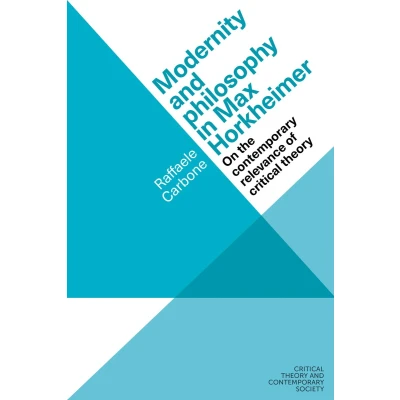
This book shows that Max Horkheimer’s program of critical theory and his research are rooted in the cogency of philosophical questions and an in-depth knowledge of the historical development of philosophical problems in their close correlation with the socio-economic framework which shaped the ‘bourgeois society’ and the Modern Era. The importance of the Frankfurt School in shaping the philosophical foundations of the social sciences – particularly its critique of positivism and its engagement with authority, emancipation, and recognition – is well established. More recently, scholars have begun to recognise its key role in forming the image contemporary philosophers have of the European past, and how this image informs their analysis of the contemporary world. This book shows that Max Horkheimer’s programme of critical theory, and his lifelong work as a university professor and thinker, are grounded in the force of philosophical questioning and a deep understanding of the historical development of philosophical problems. These problems are closely related to the socio-economic framework that shaped the ‘bourgeois society’ and the modern era. His readings of modern philosophers reveal how the bourgeoisie sought to legitimise and consolidate its position, partly through the voices of its thinkers. Through his investigation of early modern philosophy and ongoing dialogue with colleagues such as Adorno, Marcuse, Pollock, and Fromm, Horkheimer demonstrates a profound awareness of the critical force inherent in thought. Though this force is always vulnerable to crisis and decline, it can be reactivated. The book delineates how Horkheimer’s work continues to offer valuable insights into the philosophical and social challenges of the contemporary world. This book shows that Max Horkheimer’s program of critical theory and his research throughout his career as a university professor and thinker are rooted in the cogency of philosophical questions and an in-depth knowledge of the historical development of philosophical problems in their close correlation with the socio-economic framework which shaped the ‘bourgeois society’ and the Modern Era. Indeed, his analyses of modern philosophers allows us to understand how the bourgeoisie seeks legitimisation and consolidation of its position, partly through the voices of its thinkers. In this way, in his investigation of early modern philosophy problems, and through constant dialogue with his colleagues Adorno, Marcuse, Pollock and Fromm, Horkheimer expresses a profound awareness of the critical force inherent in thought which, admittedly, is ever vulnerable to crisis and weakening, but which can always be reactivated.
 Prijshistorie
 * Prijshistorie bevat geen data van Amazon, Amazon Marketplace.
Prijzen voor het laatst bijgewerkt op:
 Gerelateerde resultaten
 Productspecificaties


