
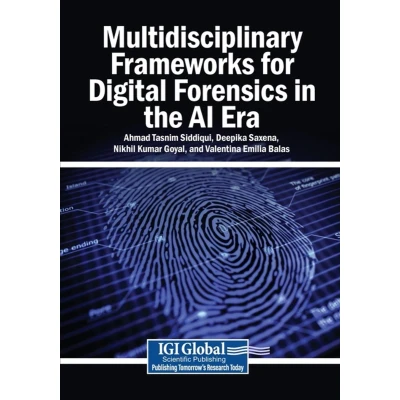
Multidisciplinary Frameworks for Digital Forensics in the AI Era
Uitgelicht

|
174,00 |
Naar shop
|
| VERGELIJK ALLE AANBIEDERS (1) | ||
 Beschrijving
Bol
The rapid advancement of artificial intelligence (AI) and digital technologies is reshaping cybercrime and digital investigations, introducing new challenges in identifying, analyzing, and interpreting digital evidence. Emerging threats demand forensic approaches that move beyond traditional, tool-centric methods. At the same time, AI and machine learning are enhancing evidence acquisition, pattern recognition, anomaly detection, and investigative decision-making. This convergence requires multidisciplinary frameworks that integrate computer science, cybersecurity, AI, law, ethics, and policy. Such approaches are essential to ensure forensic accuracy, transparency, and legal admissibility. Multidisciplinary Frameworks for Digital Forensics in the AI Era develops integrated approaches to address the evolving challenges of digital forensics in the age of AI. This book advances current research by combining AI-driven forensic techniques with established investigative, legal, and ethical principles, bridging critical gaps between theory, practice, and policy. By bringing together contributions from diverse disciplines and real-world case studies, it extends existing digital forensics research, fosters cross-disciplinary collaboration, and supports the development of robust, adaptive, and future-ready solutions for complex digital ecosystems. Covering topics such as anti-forensic masks in synthetic media, structured visual evidence reasoning, and automated cyber-attack investigation, this book is a vital academic resource for graduate and doctoral students, digital forensic analysts, law enforcement agencies, cybersecurity practitioners, policymakers, legal professionals, and more.


Vergelijk aanbieders (1)

 Beschrijving
(1)
Beschrijving
(1)
The rapid advancement of artificial intelligence (AI) and digital technologies is reshaping cybercrime and digital investigations, introducing new challenges in identifying, analyzing, and interpreting digital evidence. Emerging threats demand forensic approaches that move beyond traditional, tool-centric methods. At the same time, AI and machine learning are enhancing evidence acquisition, pattern recognition, anomaly detection, and investigative decision-making. This convergence requires multidisciplinary frameworks that integrate computer science, cybersecurity, AI, law, ethics, and policy. Such approaches are essential to ensure forensic accuracy, transparency, and legal admissibility. Multidisciplinary Frameworks for Digital Forensics in the AI Era develops integrated approaches to address the evolving challenges of digital forensics in the age of AI. This book advances current research by combining AI-driven forensic techniques with established investigative, legal, and ethical principles, bridging critical gaps between theory, practice, and policy. By bringing together contributions from diverse disciplines and real-world case studies, it extends existing digital forensics research, fosters cross-disciplinary collaboration, and supports the development of robust, adaptive, and future-ready solutions for complex digital ecosystems. Covering topics such as anti-forensic masks in synthetic media, structured visual evidence reasoning, and automated cyber-attack investigation, this book is a vital academic resource for graduate and doctoral students, digital forensic analysts, law enforcement agencies, cybersecurity practitioners, policymakers, legal professionals, and more.
 Productspecificaties
| EAN |
|
|---|---|
| Maat |
|
 Prijshistorie
Prijzen voor het laatst bijgewerkt op:
 Gerelateerde resultaten


