


€ 30,95 Gratis verzending

Uitgelicht
|
|
30,95 |
Naar shop
|

|
66,34 |
Naar shop
|

|
66,34 |
Naar shop
|
| VERGELIJK ALLE AANBIEDERS (3) | ||
 Beschrijving
Vergelijk aanbieders (3)
€ 30,95 Gratis verzending
€ 66,34 € 9,99 verzendkosten Totaal € 76,33
€ 66,34 € 9,99 verzendkosten Totaal € 76,33
Winkels met andere maten
Beschrijving
(1)
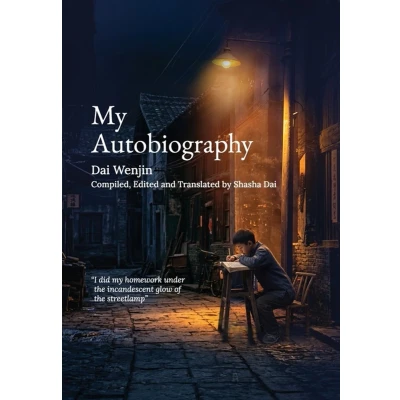
A working-class life. The Cultural Revolution he survived. A story he could never tell at home.A tailor's son does his homework by streetlamp because his family has no electricity. Decades later, that same boy is a dean at a Chinese university, having lived through a factory floor, a broken educational system and one of the most turbulent centuries in his country's history.Dai Wenjin was born in 1948, on the eve of Liberation, into a grassroots tailor's family in Nanchang. He grew up in a single cramped alleyway home with no desk, no study room and no electric light. He came of age as a factory worker during the Cultural Revolution. Then, through one anomalous opening in a broken system, he was admitted to Tsinghua University, China's most prestigious institution, and went on to a four-decade career as a professor and dean.Western accounts of the Cultural Revolution tend to dwell on singular trauma or the political fall of elites. This memoir is different. Told with the even-keeled clarity of the professor Dai Wenjin became, it is a rare, unsanitized record of how an ordinary working-class family navigated the tectonic shifts of mid-century China, neither dramatized nor softened, simply remembered.The book is published in the United States because it cannot be published in China. A private family attempt to translate it was deleted in real time by a Chinese app's censorship filters, silently and without appeal. This edition exists so that the story survives that silence.Compiled, translated and edited by his elder daughter, Shasha Dai, a former Wall Street Journal reporter, My Autobiography is both a personal record and a work of living history. Drawn from more than a year and a half of recorded interviews between father and daughter, the book preserves Dai Wenjin's own voice and cadence in translation, resisting the urge to smooth his account into something more polished or more familiar to Western readers.This bilingual edition presents the story first in English, then in its original Chinese, allowing readers on either side of the language divide equal access to the same testimony. A 13-photograph insert, drawn from the family's personal archive and restored from decades-old prints, punctuates the narrative at its emotional hinge point, offering readers a visual counterpart to the text.My Autobiography speaks to anyone drawn to firsthand accounts of 20th-century China, to readers of memoir and oral history, and to families anywhere who have wondered how to preserve a parent's story before it is lost. It is, above all, a record of what one family chose to remember, and what one country tried to make them forget.
 Prijshistorie
 * Prijshistorie bevat geen data van Amazon, Amazon Marketplace.
Prijzen voor het laatst bijgewerkt op:
 Gerelateerde resultaten
 Productspecificaties


