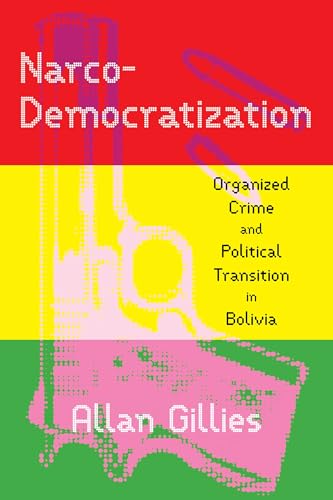
Narco Democratization: Organized Crime and Political Transition in Bolivia

Prijzen vanaf
102,17

Uitgelicht

VERGELIJK ALLE AANBIEDERS (2)

Beschrijving

Bol The development of the global illicit drug trade has posed significant challenges to democracy throughout Latin America. As Bolivia democratized, state-narco networks evolved and became bound to a fragile post-transition settlement between the main political actors. The development of the global illicit drug trade has posed significant challenges to democracy throughout Latin America. Scenes of violence and disorder linked to organized crime and the “war on drugs” are imprinted in the popular consciousness. The case of Bolivia, though, shows that the dominant narrative wasn’t the only one. Following decades of authoritarian government, Bolivia democratized in 1982. Its cocaine economy grew rapidly, and the United States made Bolivia a focus of its war on drugs. Such factors are often associated with increased violence in Latin America, yet Bolivia largely avoided a similar fate. State-narco networks—relations of patronage between state actors and Bolivia’s organized crime groups—played an important role in suppressing violent competition in the cocaine trade. These networks were established during the country’s authoritarian period and reflected the historic clientelistic functions of the Bolivian state. As Bolivia democratized, state-narco networks evolved and became bound to a fragile post-transition settlement between the main political actors. Allan Gillies reveals how these networks shaped Bolivia’s political transition while controlling violence, but also limited the function of democracy by reinforcing authoritarian and corrupt practices.

Vergelijk aanbieders (2)

Shop
Prijs
Verzendkosten
Totale prijs
102,17
3,00
105,17
Naar shop
3,00 Shipping Costs
105,00
Gratis
105,00
Naar shop
Gratis Shipping Costs
Beschrijving (2)
Bol

The development of the global illicit drug trade has posed significant challenges to democracy throughout Latin America. As Bolivia democratized, state-narco networks evolved and became bound to a fragile post-transition settlement between the main political actors. The development of the global illicit drug trade has posed significant challenges to democracy throughout Latin America. Scenes of violence and disorder linked to organized crime and the “war on drugs” are imprinted in the popular consciousness. The case of Bolivia, though, shows that the dominant narrative wasn’t the only one. Following decades of authoritarian government, Bolivia democratized in 1982. Its cocaine economy grew rapidly, and the United States made Bolivia a focus of its war on drugs. Such factors are often associated with increased violence in Latin America, yet Bolivia largely avoided a similar fate. State-narco networks—relations of patronage between state actors and Bolivia’s organized crime groups—played an important role in suppressing violent competition in the cocaine trade. These networks were established during the country’s authoritarian period and reflected the historic clientelistic functions of the Bolivian state. As Bolivia democratized, state-narco networks evolved and became bound to a fragile post-transition settlement between the main political actors. Allan Gillies reveals how these networks shaped Bolivia’s political transition while controlling violence, but also limited the function of democracy by reinforcing authoritarian and corrupt practices.

Amazon

Pagina's: 216, Hardcover, University of Pittsburgh Press


Productspecificaties

Merk University of Pittsburgh Press
EAN
  • 9780822948919
Maat


Prijshistorie

* Prijshistorie bevat geen data van Amazon.

Prijzen voor het laatst bijgewerkt op:

Uitgelichte Keuze
102,17
Naar shop
