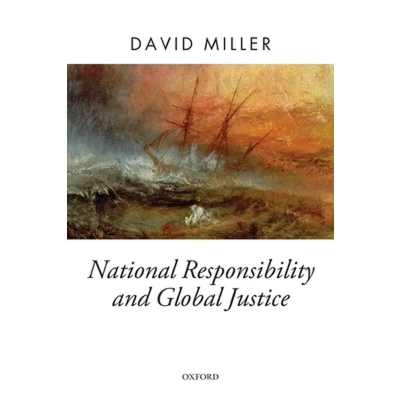

National Responsibility And Global Justice

Prijzen vanaf
36,99

Uitgelicht

VERGELIJK ALLE AANBIEDERS (2)

Beschrijving

Bol Steering a middle course between cosmopolitanism and a narrow nationalism, the book develops an original theory of global justice that also addresses controversial topics such as immigration and reparations for historic wrongdoing. This book presents a non-cosmopolitan theory of global justice. In contrast to theories that seek to extend principles of social justice, such as equality of opportunity or resources, to the world as a whole, it argues that in a world made up of self-determining national communities, a different conception is needed. The book presents and defends an account of national responsibility which entails that nations may justifiably claim the benefits that their decisions and policies produce, while also being held liable for harms that they inflict on other peoples. Such collective responsibility extends to responsibility for the national past, so the present generation may owe redress to those who have been harmed by the actions of their predecessors. Global justice, therefore, must be understood not in terms of equality, but in terms of a minimum set of basic rights that belong to human beings everywhere. Where these rights are being violated or threatened, remedial responsibility may fall on outsiders. The book considers how this responsibility should be allocated, and how far citizens of democratic societies must limit their pursuit of domestic objectives in order to discharge their global obligations. The book presents a systematic challenge to existing theories of global justice without retreating to a narrow nationalism that denies that we have any responsibilities to the world's poor. It combines discussion of practical questions such as immigration and foreign aid with philosophical exploration of, for instance, the different senses of responsibility, and the grounds of human rights. Oxford Political Theory presents the best new work in contemporary political theory. It is intended to be broad in scope, including original contributions to political philosophy, and also work in applied political theory. The series will contain works of outstanding quality with no restriction as to approach or subject matter. Series Editors: Will Kymlicka, David Miller, and Alan Ryan.

Vergelijk aanbieders (2)

Shop
Prijs
Verzendkosten
Totale prijs
36,99
Gratis
36,99
Naar shop
Gratis Shipping Costs
57,96
gebruikt
Gratis
57,96
Naar shop
Gratis Shipping Costs
Beschrijving (2)
Bol

Steering a middle course between cosmopolitanism and a narrow nationalism, the book develops an original theory of global justice that also addresses controversial topics such as immigration and reparations for historic wrongdoing. This book presents a non-cosmopolitan theory of global justice. In contrast to theories that seek to extend principles of social justice, such as equality of opportunity or resources, to the world as a whole, it argues that in a world made up of self-determining national communities, a different conception is needed. The book presents and defends an account of national responsibility which entails that nations may justifiably claim the benefits that their decisions and policies produce, while also being held liable for harms that they inflict on other peoples. Such collective responsibility extends to responsibility for the national past, so the present generation may owe redress to those who have been harmed by the actions of their predecessors. Global justice, therefore, must be understood not in terms of equality, but in terms of a minimum set of basic rights that belong to human beings everywhere. Where these rights are being violated or threatened, remedial responsibility may fall on outsiders. The book considers how this responsibility should be allocated, and how far citizens of democratic societies must limit their pursuit of domestic objectives in order to discharge their global obligations. The book presents a systematic challenge to existing theories of global justice without retreating to a narrow nationalism that denies that we have any responsibilities to the world's poor. It combines discussion of practical questions such as immigration and foreign aid with philosophical exploration of, for instance, the different senses of responsibility, and the grounds of human rights. Oxford Political Theory presents the best new work in contemporary political theory. It is intended to be broad in scope, including original contributions to political philosophy, and also work in applied political theory. The series will contain works of outstanding quality with no restriction as to approach or subject matter. Series Editors: Will Kymlicka, David Miller, and Alan Ryan.

Bol Partner

Steering a middle course between cosmopolitanism and a narrow nationalism, the book develops an original theory of global justice that also addresses controversial topics such as immigration and reparations for historic wrongdoing. Oxford Political Theory presents the best new work in contemporary political theory. It is intended to be broad in scope, including original contributions to political philosophy, and also work in applied political theory. The series will contain works of outstanding quality with no restriction as to approach or subject matter. Series Editors: Will Kymlicka, David Miller, and Alan Ryan. This book presents a non-cosmopolitan theory of global justice. In contrast to theories that seek to extend principles of social justice, such as equality of opportunity or resources, to the world as a whole, it argues that in a world made up of self-determining national communities, a different conception is needed. The book presents and defends an account of national responsibility which entails that nations may justifiably claim the benefits that their decisions and policies produce, while also being held liable for harms that they inflict on other peoples. Such collective responsibility extends to responsibility for the national past, so the present generation may owe redress to those who have been harmed by the actions of their predecessors. Global justice, therefore, must be understood not in terms of equality, but in terms of a minimum set of basic rights that belong to human beings everywhere. Where these rights are being violated or threatened, remedial responsibility may fall on outsiders. The book considers how this responsibility should be allocated, and how far citizens of democratic societies must limit their pursuit of domestic objectives in order to discharge their global obligations. The book presents a systematic challenge to existing theories of global justice without retreating to a narrow nationalism that denies that we have any responsibilities to the world's poor. It combines discussion of practical questions such as immigration and foreign aid with philosophical exploration of, for instance, the different senses of responsibility, and the grounds of human rights.


Productspecificaties

EAN
  • 9780199650712
  • 9780199235056
Maat

Prijzen voor het laatst bijgewerkt op:

Uitgelichte Keuze
36,99
Naar shop
