

€ 27,48 Gratis verzending

Uitgelicht
|
|
27,48 |
Naar shop
|

|
27,48 |
Naar shop
|

|
30,99 |
Naar shop
|
| VERGELIJK ALLE AANBIEDERS (3) | ||
 Beschrijving
Vergelijk aanbieders (3)
€ 27,48 Gratis verzending
€ 27,48 Gratis verzending
€ 30,99 Gratis verzending
Winkels met andere maten
Beschrijving
(1)
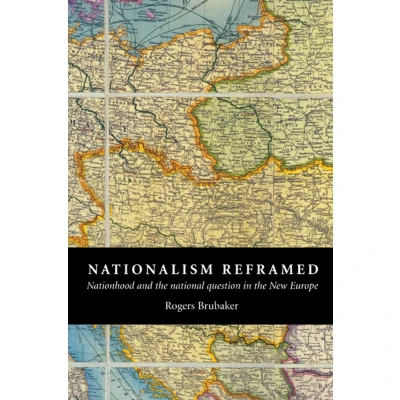
'Nationalism Reframed' is a study of nationalism in Eastern Europe and the former Soviet Union. Rogers Brubaker develops an account of the interlocking and opposed nationalisms of national minorities, the nationalising states in which they live, and the external national homelands to which they are linked by ethnic ties. The birthplace of the nation-state and modern nationalism at the end of the eighteenth century, Europe was supposed to be their graveyard at the end of the twentieth. Yet, far from moving beyond the nation-state, fin-de-siècle Europe has been moving back to the nation-state, most spectacularly with the disintegration of the Soviet Union, Yugoslavia, and Czechoslovakia into a score of nationally defined successor states. This massive reorganisation of political space along national lines has engendered distinctive, dynamically interlocking, and in some cases explosive forms of nationalism. Drawing on Pierre Bourdieu and the 'new institutionalist' sociology, and comparing contemporary nationalisms with those of interwar Europe, Rogers Brubaker provides a theoretically sophisticated and historically rich account of one of the most important problems facing the 'New Europe'.
 Prijshistorie
 * Prijshistorie bevat geen data van Amazon, Amazon Marketplace.
Prijzen voor het laatst bijgewerkt op:
 Gerelateerde resultaten
 Productspecificaties


