
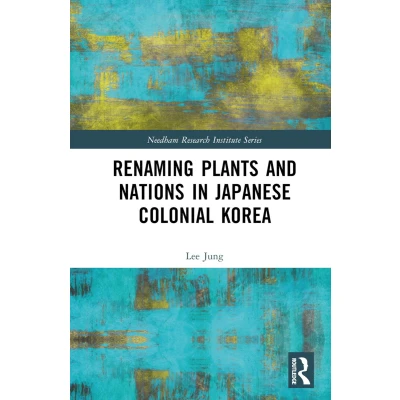
Needham Research Institute Series Renaming Plants and Nations in Japanese Colonial Korea
Uitgelicht

|
188,00 |
Naar shop
|
| VERGELIJK ALLE AANBIEDERS (1) | ||
 Beschrijving
Bol
This book studies a striking example of intensely negotiated colonial scientific practice: the case of botanical practice in Korea during the Japanese colonisation from 1910 to 1945. This book studies a striking example of intensely negotiated colonial scientific practice: the case of botanical practice in Korea during the Japanese colonization from 1910 to 1945. The shared aim of botanists who encountered one another in colonial Korea to practice “modern Western botany” is successfully revealed through analysis of their fieldwork and subsequent publications. By exploring the variations in what that term should mean and the politically charged nature of the interactions between both imperial and colonial players, it reveals how botanists of the region created a form of scientific practice that was neither clearly Western nor particularly modern. It shows how the botany that evolved in this context was a product of colonially resourced, globally connected practice, immersed in intertwined traditions, rather than simply a copy of “modern Western botany.” Utilizing extensive primary sources, this book will be of interest to students and scholars of the history of science, colonial Korean history, and environmental history.


Vergelijk aanbieders (1)

 Beschrijving
(1)
Beschrijving
(1)
This book studies a striking example of intensely negotiated colonial scientific practice: the case of botanical practice in Korea during the Japanese colonisation from 1910 to 1945. This book studies a striking example of intensely negotiated colonial scientific practice: the case of botanical practice in Korea during the Japanese colonization from 1910 to 1945. The shared aim of botanists who encountered one another in colonial Korea to practice “modern Western botany” is successfully revealed through analysis of their fieldwork and subsequent publications. By exploring the variations in what that term should mean and the politically charged nature of the interactions between both imperial and colonial players, it reveals how botanists of the region created a form of scientific practice that was neither clearly Western nor particularly modern. It shows how the botany that evolved in this context was a product of colonially resourced, globally connected practice, immersed in intertwined traditions, rather than simply a copy of “modern Western botany.” Utilizing extensive primary sources, this book will be of interest to students and scholars of the history of science, colonial Korean history, and environmental history.
 Productspecificaties
| EAN |
|
|---|---|
| Maat |
|
 Prijshistorie
Prijzen voor het laatst bijgewerkt op:
 Gerelateerde resultaten


