
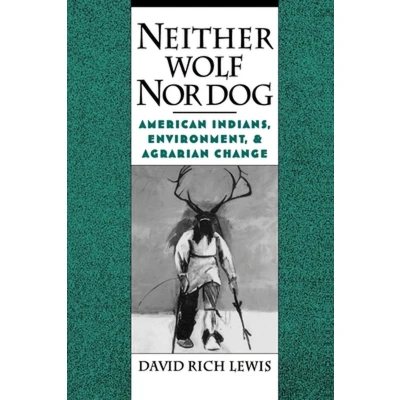
Neither Wolf Nor Dog
Uitgelicht

|
99,99 |
Naar shop
|
| VERGELIJK ALLE AANBIEDERS (1) | ||
 Beschrijving
Bol
Neither Wolf Nor Dog explores the experiences of three groups--Northern Utes, Hupas, and Tohono O'odhams--with settled reservation and allotted agriculture in the nineteenth and twentieth centuries. During the nineteenth century, Americans looked to the eventual civilization and assimilation of Native Americans through a process of removal, reservation, and directed culture change. Policies for directed subsistence change and incorporation had far-reaching social and environmental consequences for native peoples and native lands. This study explores the experiences of three groups--Northern Utes, Hupas, and Tohono O'odhams--with settled reservation and allotted agriculture in the nineteenth and twentieth centuries. Each group inhabited a different environment, and their cultural traditions reflected distinct subsistence adaptations to life in the western United States. Each experienced the full weight of federal agrarian policy yet responded differently, in culturally consistent ways, to subsistence change and the resulting social and environmental consequences. Attempts to establish successful agricultural economies ultimately failed as each group reproduced their own cultural values in a diminished and rapidly changing environment. In the end, such policies and agrarian experiences left Indian farmers marginally incorporated and economically dependent.


Vergelijk aanbieders (1)

 Beschrijving
(1)
Beschrijving
(1)
Neither Wolf Nor Dog explores the experiences of three groups--Northern Utes, Hupas, and Tohono O'odhams--with settled reservation and allotted agriculture in the nineteenth and twentieth centuries. During the nineteenth century, Americans looked to the eventual civilization and assimilation of Native Americans through a process of removal, reservation, and directed culture change. Policies for directed subsistence change and incorporation had far-reaching social and environmental consequences for native peoples and native lands. This study explores the experiences of three groups--Northern Utes, Hupas, and Tohono O'odhams--with settled reservation and allotted agriculture in the nineteenth and twentieth centuries. Each group inhabited a different environment, and their cultural traditions reflected distinct subsistence adaptations to life in the western United States. Each experienced the full weight of federal agrarian policy yet responded differently, in culturally consistent ways, to subsistence change and the resulting social and environmental consequences. Attempts to establish successful agricultural economies ultimately failed as each group reproduced their own cultural values in a diminished and rapidly changing environment. In the end, such policies and agrarian experiences left Indian farmers marginally incorporated and economically dependent.
 Productspecificaties
| EAN |
|
|---|---|
| Maat |
|
 Prijshistorie
Prijzen voor het laatst bijgewerkt op:
 Gerelateerde resultaten


