
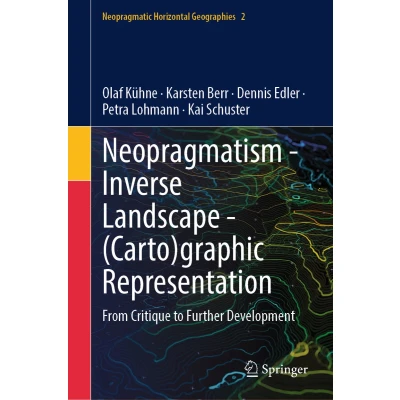
Neopragmatic Horizontal Geographies2 Neopragmatism Inverse Landscape (Carto)graphic Representation
Uitgelicht

|
159,00 |
Naar shop
|
| VERGELIJK ALLE AANBIEDERS (1) | ||
 Beschrijving
Bol
The contingency of landscape becomes clear in inverse landscapes, which illustrate states and processes that are not impossible, but also not requisite. The concept of inverse landscape is subjected to criticism in various ways, from internal criticism to metatheoretical criticism to life-related pragmatic criticism. Landscape appears stable and consistent. At least, this is a common perception of landscape. This view ignores the contingency of landscape, which is evident in the past and future as well as in the present and not just in relation to the physical spaces into which 'landscape' is projected but also in relation to social constructions and individual experience. The contingency of landscape becomes clear in inverse landscapes, which illustrate states and processes that are not impossible, but also not requisite. In this way, inverse landscapes form a tool for operationalizing the neopragmatist idea of expanding contingency. The concept of inverse landscape is subjected to criticism in various ways, from internal criticism to metatheoretical criticism to life-related pragmatic criticism. This critique is performed from an interdisciplinary perspective. The aim of this book is to further develop the concept, both regarding a more differentiated understanding of the contingency of landscape and also concerning the question of how it can help to solve practical problems in the context of 'landscape'. Landscape appears stable and consistent. At least, this is a common perception of landscape. This view ignores the contingency of landscape, which is evident in the past and future as well as in the present and not just in relation to the physical spaces into which 'landscape' is projected but also in relation to social constructions and individual experience. The contingency of landscape becomes clear in inverse landscapes, which illustrate states and processes that are not impossible, but also not requisite. In this way, inverse landscapes form a tool for operationalizing the neopragmatist idea of expanding contingency. The concept of inverse landscape is subjected to criticism in various ways, from internal criticism to metatheoretical criticism to life-related pragmatic criticism. This critique is performed from an interdisciplinary perspective. The aim of this book is to further develop the concept, both regarding a more differentiated understanding of the contingency of landscape and also concerning the question of how it can help to solve practical problems in the context of 'landscape'.


Vergelijk aanbieders (1)

 Beschrijving
(1)
Beschrijving
(1)
The contingency of landscape becomes clear in inverse landscapes, which illustrate states and processes that are not impossible, but also not requisite. The concept of inverse landscape is subjected to criticism in various ways, from internal criticism to metatheoretical criticism to life-related pragmatic criticism. Landscape appears stable and consistent. At least, this is a common perception of landscape. This view ignores the contingency of landscape, which is evident in the past and future as well as in the present and not just in relation to the physical spaces into which 'landscape' is projected but also in relation to social constructions and individual experience. The contingency of landscape becomes clear in inverse landscapes, which illustrate states and processes that are not impossible, but also not requisite. In this way, inverse landscapes form a tool for operationalizing the neopragmatist idea of expanding contingency. The concept of inverse landscape is subjected to criticism in various ways, from internal criticism to metatheoretical criticism to life-related pragmatic criticism. This critique is performed from an interdisciplinary perspective. The aim of this book is to further develop the concept, both regarding a more differentiated understanding of the contingency of landscape and also concerning the question of how it can help to solve practical problems in the context of 'landscape'. Landscape appears stable and consistent. At least, this is a common perception of landscape. This view ignores the contingency of landscape, which is evident in the past and future as well as in the present and not just in relation to the physical spaces into which 'landscape' is projected but also in relation to social constructions and individual experience. The contingency of landscape becomes clear in inverse landscapes, which illustrate states and processes that are not impossible, but also not requisite. In this way, inverse landscapes form a tool for operationalizing the neopragmatist idea of expanding contingency. The concept of inverse landscape is subjected to criticism in various ways, from internal criticism to metatheoretical criticism to life-related pragmatic criticism. This critique is performed from an interdisciplinary perspective. The aim of this book is to further develop the concept, both regarding a more differentiated understanding of the contingency of landscape and also concerning the question of how it can help to solve practical problems in the context of 'landscape'.
 Productspecificaties
| EAN |
|
|---|---|
| Maat |
|
 Prijshistorie
Prijzen voor het laatst bijgewerkt op:
 Gerelateerde resultaten


