


€ 26,69 Gratis verzending

Gesponsorde links
|
|
26,69 |
Naar shop
|

|
28,30 |
Naar shop
|
| VERGELIJK ALLE AANBIEDERS (2) | ||
 Beschrijving
Vergelijk aanbieders (2)
Gesponsorde links · Sommige shops betalen ons een vergoeding
€ 26,69 Gratis verzending
€ 28,30 Gratis verzending
Winkels met andere maten
Beschrijving
(1)
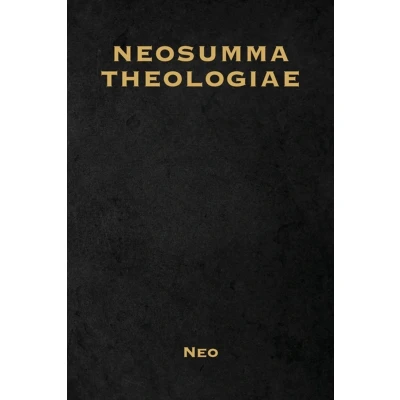
The Problem The most influential man of the past millennium is called Thomas Aquinas, a medieval theologian who shaped the very meanings of our words. The world we call made of matter; but what is matter? Children we call brimming with potential; but what is potential? It is said that man has a free will; but what is freedom? What is the will? What is this man? You speak through subjects and verbs, an I who does. But what is the I? How does the I do? What is the substance of these terms? And what is substance? Substance too is an ideation of Thomas Aquinas.And that is the problem. What is matter? What is potential? What is freedom? What is the will? What is the I who does, and how does the I do? When we think about these things truly, what we find is that these terms are without referent to reality. A tree we can point to; an emotion we can feel; but what is the I who does? I shall give you a hint, that the I is a thought in your mind; you can see it and feel it; canst thou not? Our thoughts and actions do not proceed from the I, which is itself a thought, but the being, which is distinct. This I, as we shall find, does not exist except as a grammatical case reified by Thomas Aquinas into a feature of the human nature.Aquinas was a theologian; but his terms we find littered throughout even the secular lexicon. How is it that the modern man and woman, children of the Enlightenment, champions of reason against speculation, remain enthralled by the fallacies of a medieval monk?And for the Christians, amongst whom I stand, what is the I who does? How does the I do? Do you know? Let me tell you a thing, that you cannot be the salt of the earth, a light in the darkness, who does not know what he is talking about. How indeed shall you preach that a man must choose Christ, who does not know what the man is who chooses, what a choice is, or how the man comes to choose? If I have told you earthly things, and ye believe not, how shall ye believe, if I tell you of heavenly things? The Solution Aquinas did not work alone, but with a menagerie of pagan philosophers strewn about his bibliography, called Plato, Plotinus and Aristotle. Their sins, he imbibed; their errors, he reified and deified. Their every heresy he did not rebuke, nay, but consumed whole before excreting his magnum opus of eternal damnation, the Summa Theologiae, "Summary of Theology," and indeed, Summary of Heresy, that most profane and unholy scripture of the Devil as he walks this Earth.But that which Aquinas preached toward perdition, I preach toward salvation. And that which he worships in ignorance, this declare I unto him, a God not concocted by pagan detritus, a faith not plagued by convolution, but truth pure and simple, as revealed through scripture and sense in common. All folly found in the Summa Theologiae, I rectify in this Neosumma Theologiae, toward the erudition of man, and the glory of God, to whom be glory forever. Amen.
 Prijshistorie
* Prijshistorie bevat geen data van Amazon.
Prijzen voor het laatst bijgewerkt op:
 Gerelateerde resultaten
 Productspecificaties


