
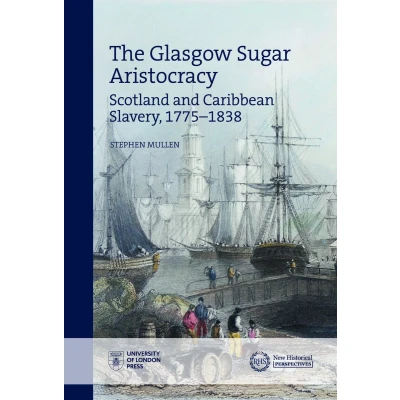
New Historical Perspectives The Glasgow Sugar Aristocracy
Uitgelicht

|
33,99 |
Naar shop
|

|
108,88 |
Naar shop
|
| VERGELIJK ALLE AANBIEDERS (2) | ||
 Beschrijving
Bol
The first book to outline Scotlands colonial past and Glasgows direct links with the slave trade through sugar plantations. This important book assesses the size and nature of Caribbean slaverys economic impact on British society. The Glasgow Sugar Aristocracy, a grouping of West India merchants and planters, became active before the emancipation of chattel slavery in the British West Indies in 1834. Many acquired nationally significant fortunes, and their investments percolated into the Scottish economy and wider society. At its core, the book traces the development of merchant capital and poses several interrelated questions during an era of rapid transformation, namely, what impact the private investments of West India merchants and colonial adventurers had on metropolitan society and the economy, as well as the wider effects of such commerce on industrial and agricultural development. The book also examines the fortunes of temporary Scottish economic migrants who traveled to some of the wealthiest of the Caribbean islands, presenting the first large-scale survey of repatriated slavery fortunes via case studies of Scots in Jamaica, Grenada, and Trinidad before emancipation in 1834. It, therefore, takes a new approach to illuminate the world of individuals who acquired West Indian fortunes and ultimately explores, in an Atlantic frame, the interconnections between the colonies and metropole in the late eighteenth and early nineteenth centuries.


 Beschrijving
(2)
Beschrijving
(2)
The first book to outline Scotlands colonial past and Glasgows direct links with the slave trade through sugar plantations. This important book assesses the size and nature of Caribbean slaverys economic impact on British society. The Glasgow Sugar Aristocracy, a grouping of West India merchants and planters, became active before the emancipation of chattel slavery in the British West Indies in 1834. Many acquired nationally significant fortunes, and their investments percolated into the Scottish economy and wider society. At its core, the book traces the development of merchant capital and poses several interrelated questions during an era of rapid transformation, namely, what impact the private investments of West India merchants and colonial adventurers had on metropolitan society and the economy, as well as the wider effects of such commerce on industrial and agricultural development. The book also examines the fortunes of temporary Scottish economic migrants who traveled to some of the wealthiest of the Caribbean islands, presenting the first large-scale survey of repatriated slavery fortunes via case studies of Scots in Jamaica, Grenada, and Trinidad before emancipation in 1834. It, therefore, takes a new approach to illuminate the world of individuals who acquired West Indian fortunes and ultimately explores, in an Atlantic frame, the interconnections between the colonies and metropole in the late eighteenth and early nineteenth centuries.
Bol PartnerThe wealth generated both directly and indirectly by Caribbean slavery had a major impact on Glasgow and Scotland. Glasgow's Sugar Aristocracy is the first book to directly assess the size, nature and effects of this. West India merchants and plantation owners based in Glasgow made nationally significant fortunes, some of which boosted Scottish capitalism, as well as the temporary Scottish economic migrants who travelled to some of the wealthiest of the Caribbean islands. This book adds much needed nuance to the argument in a Scottish context; revealing methods of repatriating wealth from the Caribbean as well as mercantile investments in industry, banking and land and philanthropic initiatives.
 Productspecificaties
| EAN |
|
|---|---|
| Maat |
|
 Prijshistorie
Prijzen voor het laatst bijgewerkt op:
 Gerelateerde resultaten


