


€ 99,99 Gratis verzending

Uitgelicht
|
|
99,99 |
Naar shop
|
| VERGELIJK ALLE AANBIEDERS (1) | ||
 Beschrijving
Vergelijk aanbieders (1)
€ 99,99 Gratis verzending
Winkels met andere maten
Beschrijving
(1)
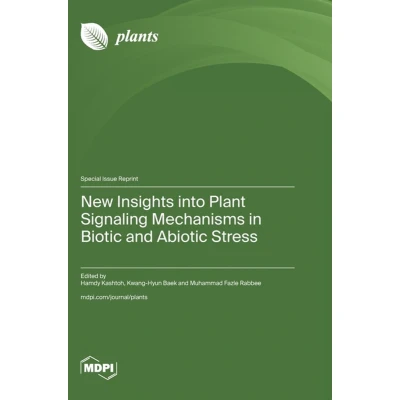
Plants are constantly challenged by their environments, including both biotic and abiotic stress factors. As a result, plants have developed complex signaling pathways in response to various challenges, allowing them to adapt and survive. In order to detect and react to pathogen attacks, herbivore feeding, and symbiotic interactions in the case of biotic stress, plants use a complex network of signaling molecules, including phytohormones, reactive oxygen species (ROS), and secondary metabolites. These signaling cascades cause the activation of systemic acquired resistance, the synthesis of antimicrobial chemicals, the reinforcement of physical barriers, and genes involved in defense. When plants are exposed to abiotic stress, such as drought, extreme temperatures, salinity, and nutrient deficiencies, they use different signaling pathways to adapt. Abscisic acid (ABA), ethylene, jasmonic acid (JA), calcium ions, and other signaling molecules are involved in these pathways. These signaling molecules coordinate cellular responses such as stomatal closure, osmotic correction, and the activation of stress-responsive genes. Understanding the mechanisms of plant signaling networks involved in biotic and abiotic stress responses is essential for developing crop plants that are resilient to changing environmental conditions. This reprint aims to present recent contributions to developing our understanding of the mechanisms involved in plant responses to biotic and abiotic stress.
 Productspecificaties
| EAN |
|
|---|---|
| Maat |
|
 Prijshistorie
 Prijzen voor het laatst bijgewerkt op:
 Gerelateerde resultaten


