
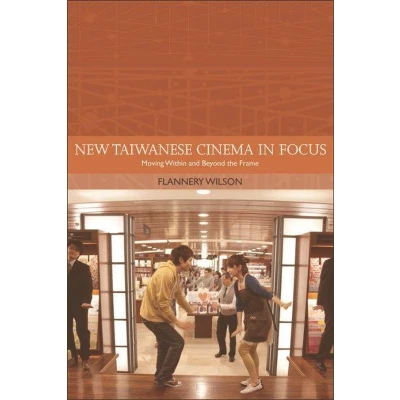
New Taiwanese Cinema in Focus
Uitgelicht

|
28,99 |
Naar shop
|

|
106,45 |
Naar shop
|
| VERGELIJK ALLE AANBIEDERS (2) | ||
 Beschrijving
Bol Partner
In the Taiwanese film industry, the dichotomy between arthouse and commercially viable films is heavily emphasized by both scholars and the local media. This book provides a nuanced picture of the Taiwanese film industry since democratization and isolation from the Peoples Republic of China. This book places Taiwanese cinema from the 1980s onwards in both national and transnational contexts. In the Taiwanese film industry, the dichotomy between arthouse and commercially viable films is heavily emphasized by both scholars and the local media. Ostensibly, this dichotomy stems from two separate desires on the part of filmmakers. Arthouse filmmakers in Taiwan are largely dependent on international distributors for funding, and, as a result, they aim to reach international audiences. On the other hand, mainstream commercial films in Taiwan tend to be produced without international export in mind. On a textual level, however, this dichotomy is not so clear-cut. Although the opposition between arthouse and commercial film may be very real in financial terms, in the context of the films themselves, the national and transnational (or inter-textual) aspects of Taiwanese cinema are not oppositional. These unlikely relationships create the need for a new way of thinking about transnationalism altogether. It provides a nuanced picture of the Taiwanese film industry since democratization and isolation from the Peoples Republic of China. It features close readings of the films of Tsai Ming-liang, Edward Yang, Hou Hsiaohsien, and others. It connects Taiwanese cinema to the global cinema landscape more generally. It refines the study of transnationalism by positing a new mode for viewing contemporary national cinema movements.


 Beschrijving
(2)
Beschrijving
(2)
In the Taiwanese film industry, the dichotomy between arthouse and commercially viable films is heavily emphasized by both scholars and the local media. This book provides a nuanced picture of the Taiwanese film industry since democratization and isolation from the Peoples Republic of China. This book places Taiwanese cinema from the 1980s onwards in both national and transnational contexts. In the Taiwanese film industry, the dichotomy between arthouse and commercially viable films is heavily emphasized by both scholars and the local media. Ostensibly, this dichotomy stems from two separate desires on the part of filmmakers. Arthouse filmmakers in Taiwan are largely dependent on international distributors for funding, and, as a result, they aim to reach international audiences. On the other hand, mainstream commercial films in Taiwan tend to be produced without international export in mind. On a textual level, however, this dichotomy is not so clear-cut. Although the opposition between arthouse and commercial film may be very real in financial terms, in the context of the films themselves, the national and transnational (or inter-textual) aspects of Taiwanese cinema are not oppositional. These unlikely relationships create the need for a new way of thinking about transnationalism altogether. It provides a nuanced picture of the Taiwanese film industry since democratization and isolation from the Peoples Republic of China. It features close readings of the films of Tsai Ming-liang, Edward Yang, Hou Hsiaohsien, and others. It connects Taiwanese cinema to the global cinema landscape more generally. It refines the study of transnationalism by positing a new mode for viewing contemporary national cinema movements.
BolIn the Taiwanese film industry, the dichotomy between 'art-house' and commercially viable films is heavily emphasized. However, since the democratization of the political landscape in Taiwan, Taiwanese cinema has become internationally fluid. As the case studies in this book demonstrate, filmmakers such as Hou Hsiao-hsien, Edward Yang, Tsai Ming-liang, and Ang Lee each engage with international audience expectations. New Taiwanese Cinema in Focus therefore presents the Taiwanese New Wave and Second Wave movements with an emphasis on intertextuality, citation and trans-cultural dialogue. Wilson argues that the cinema of Taiwan since the 1980s should be read emblematically; that is, as a representation of the greater paradox that exists in national and transnational cinema studies. She argues that these unlikely relationships create the need for a new way of thinking about 'transnationalism' altogether, making this an essential read for advanced students and scholars in both Film Studies and Asian Studies.
 Productspecificaties
| EAN |
|
|---|---|
| Maat |
|
 Prijshistorie
Prijzen voor het laatst bijgewerkt op:
 Gerelateerde resultaten


