








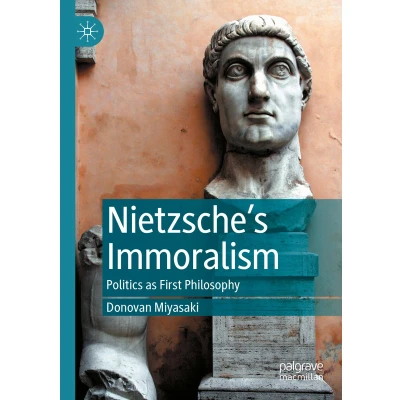
Nietzsche’s Immoralism
Uitgelicht

|
46,99 |
Naar shop
|
 Beschrijving
Bol
This incompatibilist, anti-teleological psychology leads to Nietzsche’s distinctive immoralism: the abandonment of cultural means of human improvement for a historical materialist politics of breeding that produces future higher types through changes to our political order’s material conditions. Nietzsche’s Immoralism begins a two-volume critical reconstruction of a socialist, democratic, and non-liberal Nietzschean politics. Nietzsche’s ideal of amor fati (love of fate) cannot be individually adopted because it is incompatible with deep freedom of agency. However, we can create its social conditions thanks to an underappreciated aspect of his will-to-power psychology. We are driven not toward domination and conquest but toward resistance, contest, and play—a heightened feeling of power provoked by equal challenges that enables the non-instrumental affirmation of suffering. This incompatibilist, anti-teleological psychology leads to Nietzsche’s distinctive immoralism: the abandonment of cultural means of human improvement for a historical materialist politics of breeding that produces future higher types through changes to our political order’s material conditions. Politics becomes first philosophy: it is not grounded in moral values but is instead the very source of their legitimacy. Moreover, despite Nietzsche’s professed aristocratism, his immoralism offers a stronger foundation for a renewed left, attacking conservative politics at its very root: the belief in moral order, authority, and responsibility. Nietzsche’s Immoralism begins a two-volume critical reconstruction of a socialist, democratic, and non-liberal Nietzschean politics. Nietzsche’s ideal of amor fati (love of fate) cannot be individually adopted because it is incompatible with deep freedom of agency. However, we can create its social conditions thanks to an underappreciated aspect of his will-to-power psychology. We are driven not toward domination and conquest but toward resistance, contest, and play—a heightened feeling of power provoked by equal challenges that enables the non-instrumental affirmation of suffering. This incompatibilist, anti-teleological psychology leads to Nietzsche’s distinctive immoralism: the abandonment of cultural means of human improvement for a historical materialist politics of breeding that produces future higher types through changes to our political order’s material conditions. Politics becomes first philosophy: it is not grounded in moral values but is instead the very source of their legitimacy. Moreover, despite Nietzsche’s professed aristocratism, his immoralism offers a stronger foundation for a renewed left, attacking conservative politics at its very root: the belief in moral order, authority, and responsibility.


Vergelijk aanbieders (1)

 Beschrijving
(1)
Beschrijving
(1)
This incompatibilist, anti-teleological psychology leads to Nietzsche’s distinctive immoralism: the abandonment of cultural means of human improvement for a historical materialist politics of breeding that produces future higher types through changes to our political order’s material conditions. Nietzsche’s Immoralism begins a two-volume critical reconstruction of a socialist, democratic, and non-liberal Nietzschean politics. Nietzsche’s ideal of amor fati (love of fate) cannot be individually adopted because it is incompatible with deep freedom of agency. However, we can create its social conditions thanks to an underappreciated aspect of his will-to-power psychology. We are driven not toward domination and conquest but toward resistance, contest, and play—a heightened feeling of power provoked by equal challenges that enables the non-instrumental affirmation of suffering. This incompatibilist, anti-teleological psychology leads to Nietzsche’s distinctive immoralism: the abandonment of cultural means of human improvement for a historical materialist politics of breeding that produces future higher types through changes to our political order’s material conditions. Politics becomes first philosophy: it is not grounded in moral values but is instead the very source of their legitimacy. Moreover, despite Nietzsche’s professed aristocratism, his immoralism offers a stronger foundation for a renewed left, attacking conservative politics at its very root: the belief in moral order, authority, and responsibility. Nietzsche’s Immoralism begins a two-volume critical reconstruction of a socialist, democratic, and non-liberal Nietzschean politics. Nietzsche’s ideal of amor fati (love of fate) cannot be individually adopted because it is incompatible with deep freedom of agency. However, we can create its social conditions thanks to an underappreciated aspect of his will-to-power psychology. We are driven not toward domination and conquest but toward resistance, contest, and play—a heightened feeling of power provoked by equal challenges that enables the non-instrumental affirmation of suffering. This incompatibilist, anti-teleological psychology leads to Nietzsche’s distinctive immoralism: the abandonment of cultural means of human improvement for a historical materialist politics of breeding that produces future higher types through changes to our political order’s material conditions. Politics becomes first philosophy: it is not grounded in moral values but is instead the very source of their legitimacy. Moreover, despite Nietzsche’s professed aristocratism, his immoralism offers a stronger foundation for a renewed left, attacking conservative politics at its very root: the belief in moral order, authority, and responsibility.
 Productspecificaties
| EAN |
|
|---|---|
| Maat |
|
 Prijshistorie
Prijzen voor het laatst bijgewerkt op:
 Gerelateerde resultaten


