

€ 9,21 Gratis verzending

Gesponsorde links
|
|
9,21 |
Naar shop
|

|
9,21 |
Naar shop
|

|
10,50 |
Naar shop
|
| VERGELIJK ALLE AANBIEDERS (3) | ||
 Beschrijving
Vergelijk aanbieders (3)
Gesponsorde links · Sommige shops betalen ons een vergoeding
€ 9,21 Gratis verzending
€ 9,21 Gratis verzending
€ 10,50 € 2,99 verzendkosten Totaal € 13,49
Winkels met andere maten
Beschrijving
(1)
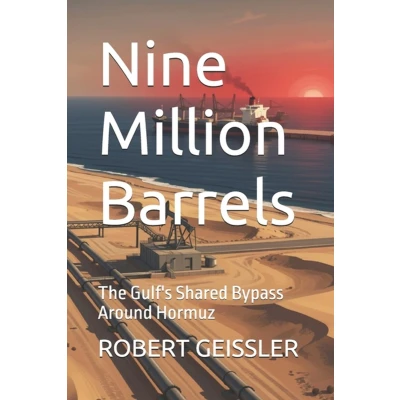
Can a single pipeline change the balance of global energy power?When the Strait of Hormuz was effectively closed in 2026 amid the U.S.-Iran conflict, the world discovered just how much of its oil supply ran through one twenty-one-mile passage - and how little margin existed if it disappeared.Saudi Arabia had an answer already in the ground: Petroline, the East-West Pipeline, built decades earlier as a contingency plan. Pushed to a record 7 million barrels per day during the crisis, it kept Saudi exports moving when tankers couldn't safely transit Hormuz. Now Kuwait, Bahrain, and Qatar want in - and Saudi Arabia is reportedly considering an expansion to 9 million barrels per day to accommodate them.In Nine Million Barrels, author Robert F. Geissler breaks down: - How Petroline actually works, and why its current 7-million-barrel capacity came from an emergency wartime conversion, not new construction- The real cost drivers behind the proposed expansion - and why no public budget or contractor has been named- Why Yanbu's port capacity, not the pipeline itself, may be the true bottleneck limiting how much oil can actually reach the export market- The pricing and contract headaches of blending multiple countries' crude into one system- Why trading Hormuz exposure for Red Sea and Bab-el-Mandeb exposure isn't the clean win it sounds like- What Saudi Arabia's Fujairah-style neighbor, the UAE, got right that Petroline's geography can't replicate- What it would mean - for regional power, for oil markets, for the next crisis - if this expansion is never finishedWritten in the Austrian and Chicago School economic tradition, with a sharp eye for incentives, institutions, and unglamorous engineering detail, this is a book for readers who want to understand Gulf energy security as it actually works - not as the headlines summarize it.
 Prijshistorie
* Prijshistorie bevat geen data van Amazon, Amazon Marketplace.
Prijzen voor het laatst bijgewerkt op:
 Gerelateerde resultaten
 Productspecificaties


