


€ 46,99 Gratis verzending

Uitgelicht
|
|
46,99 |
Naar shop
|

|
53,60 |
Naar shop
|

|
53,60 |
Naar shop
|
| VERGELIJK ALLE AANBIEDERS (3) | ||
 Beschrijving
Vergelijk aanbieders (3)
€ 46,99 Gratis verzending
€ 53,60 € 3,14 verzendkosten Totaal € 56,74
€ 53,60 € 3,14 verzendkosten Totaal € 56,74
Winkels met andere maten
Beschrijving
(1)
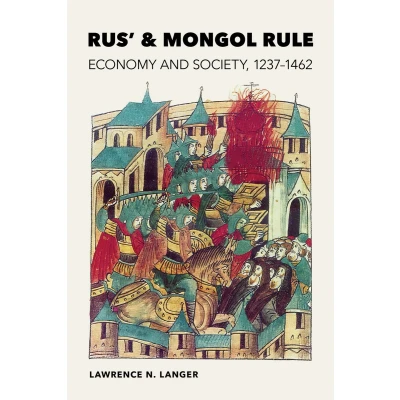
Rus' and Mongol Rule presents the fullest examination in English to date of the economic and social history of Rus' from the thirteenth to the fifteenth centuries and the impact of Mongol rule. Lawrence N. Langer shows how the Mongols were a double-edged sword, encouraging trade while imposing a harsh tribute in silver, furs, and people. Among the topics examined are the Black Death, the demographic crisis and shortage of labor, taxation and administration, patterns of warfare, the growth of monasteries, the peasantry, and slavery. Rus' and Mongol Rule begins with the Mongol conquest of Rus in 1237–1241 and ends with the death of Grand Prince Vasilli II and the ascension of his son, Ivan III "the Great" in 1462. Langer shows how the Rus' responded to the tribute by fashioning an administrative and taxation system that drew upon Mongol practice and Rus' tradition. Despite not attacking Novgorod, the Mongols had an enormous impact as the city reformed its administration to meet the demands of their tribute. Simultaneously the city was able to solidify its rights vis-a-vis the grand princes of Vladimir. Langer gives particular attention to Novgorod and its administration. He also discusses Pskov, which often receives little scholarly attention. In concluding he discusses how the governmental apparatus of Rus evolved to include elements from the Mongols but also administrative practices not unlike those found in the medieval West as well as those traditions derived from Kyivan Rus.
 Prijshistorie
 * Prijshistorie bevat geen data van Amazon, Amazon Marketplace.
Prijzen voor het laatst bijgewerkt op:
 Gerelateerde resultaten
 Productspecificaties


