

€ 102,10 Gratis verzending

Uitgelicht
|
|
102,10 |
Naar shop
|

|
102,10 |
Naar shop
|

|
110,98
109,00 |
Naar shop
|
| VERGELIJK ALLE AANBIEDERS (3) | ||
 Beschrijving
Vergelijk aanbieders (3)
€ 102,10 Gratis verzending
€ 102,10 Gratis verzending
€ 110,98 € 109,00 Gratis verzending
Winkels met andere maten
Beschrijving
(1)
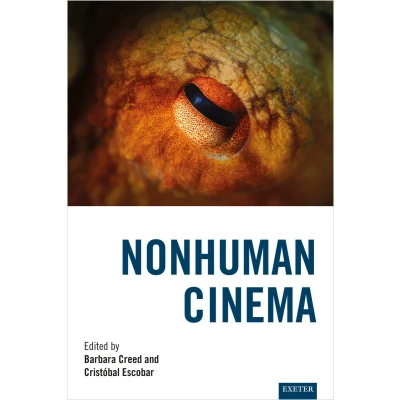
This book proposes a radical new nonhuman cinema: it examines how cinema challenges human superiority and the anthropocentric gaze while opening up new sensory, ethical, and material encounters between human and nonhuman, including the cinematic apparatus itself. It raises key ethical questions about nonhuman agency and the future of the planet. In an era defined by environmental crisis, artificial intelligence, and multispecies interdependence, what happens if we continue to ignore crucial nonhuman relationships that weigh so significantly on the future of the planet? Nonhuman Cinema explores how film can destabilize anthropocentrism and help us see and think beyond the human. In doing so, it defines what a nonhuman cinema might look like—its parameters, major characteristics, goals, and significance. Bringing together leading scholars and filmmakers, this book introduces a new framework for understanding film as a site of entanglement between humans, animals, aliens, ecosystems, cyborgs, machines, galaxies and the natural world. It examines how films can decentre the human gaze, disrupt anthropocentric narratives, undermine ontological categories, and immerse viewers in unfamiliar territories, temporalities and sensoria. Importantly, it also asks what happens when cinema itself becomes nonhuman: when the camera is no longer viewed as an instrument of human vision but as a participant in the world’s material and sensory life. Written and edited by individuals at the forefront of film and media theory, Nonhuman Cinema offers an original and vital intervention in contemporary thought. It will appeal to readers interested in film studies, media, philosophy, new materialism, environmental humanities, feminism, queer theory, art history, and to anyone curious about how cinema can help us rethink what ‘human’ really means in the twenty-first century.
 Prijshistorie
 * Prijshistorie bevat geen data van Amazon, Amazon Marketplace.
Prijzen voor het laatst bijgewerkt op:
 Gerelateerde resultaten
 Productspecificaties


