







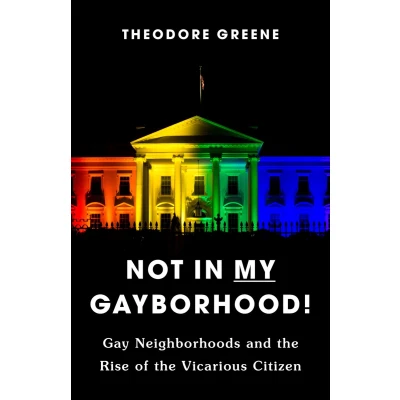
Not in My Gayborhood
Uitgelicht

|
32,99
30,99 |
Naar shop
|
 Beschrijving
Bol
Exploring “gayborhoods” in Washington, DC, Theodore Greene investigates how neighborhoods retain their cultural identities even as their inhabitants change. Gay neighborhoods are disappearing—or so the conventional story goes. In this narrative, political gains and mainstream social acceptance, combined with the popularity of dating apps like Grindr, have reduced the need for LGBTQ+ people to seek refuges or build expressly queer places. Yet even though residential patterns have shifted, traditionally gay neighborhoods remain centers of queer public life. Exploring “gayborhoods” in Washington, DC, Theodore Greene investigates how neighborhoods retain their cultural identities even as their inhabitants change. He argues that the success and survival of gay neighborhoods have always depended on participation from nonresidents in the life of the community, which he terms “vicarious citizenship.” Vicarious citizens are diverse self-identified community members, sometimes former or displaced locals, who make symbolic claims to the neighborhood. They defend their vision of community by temporarily reviving the traditions and cultures associated with the gay neighborhood and challenging the presence of straight families and other newcomers, the displacement of local institutions, or the taming of sexual culture. Greene pays careful attention to the significance of race and racism, highlighting the important role of Black LGBTQ+ culture in shaping gay neighborhoods past and present. Examining the diverse placemaking strategies that queer people deploy to foster and preserve LGBTQ+ geographies, Not in My Gayborhood illuminates different ways of imagining urban neighborhoods and communities.


Vergelijk aanbieders (1)

 Beschrijving
(1)
Beschrijving
(1)
Exploring “gayborhoods” in Washington, DC, Theodore Greene investigates how neighborhoods retain their cultural identities even as their inhabitants change. Gay neighborhoods are disappearing—or so the conventional story goes. In this narrative, political gains and mainstream social acceptance, combined with the popularity of dating apps like Grindr, have reduced the need for LGBTQ+ people to seek refuges or build expressly queer places. Yet even though residential patterns have shifted, traditionally gay neighborhoods remain centers of queer public life. Exploring “gayborhoods” in Washington, DC, Theodore Greene investigates how neighborhoods retain their cultural identities even as their inhabitants change. He argues that the success and survival of gay neighborhoods have always depended on participation from nonresidents in the life of the community, which he terms “vicarious citizenship.” Vicarious citizens are diverse self-identified community members, sometimes former or displaced locals, who make symbolic claims to the neighborhood. They defend their vision of community by temporarily reviving the traditions and cultures associated with the gay neighborhood and challenging the presence of straight families and other newcomers, the displacement of local institutions, or the taming of sexual culture. Greene pays careful attention to the significance of race and racism, highlighting the important role of Black LGBTQ+ culture in shaping gay neighborhoods past and present. Examining the diverse placemaking strategies that queer people deploy to foster and preserve LGBTQ+ geographies, Not in My Gayborhood illuminates different ways of imagining urban neighborhoods and communities.
 Productspecificaties
| EAN |
|
|---|---|
| Maat |
|
 Prijshistorie
Prijzen voor het laatst bijgewerkt op:
 Gerelateerde resultaten


