
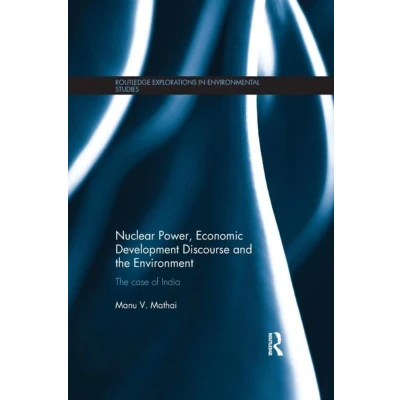
Nuclear Power, Economic Development Discourse and the Environment
Uitgelicht

|
60,99 |
Naar shop
|
| VERGELIJK ALLE AANBIEDERS (1) | ||
 Beschrijving
Bol
Nuclear power is often characterized as a "green technology." Technologies are rarely, if ever, socially isolated artefacts. Instead, they materially represent an embodiment of values and priorities. Nuclear power is no different. It is a product of a particular political economy and the question is whether that political economy can helpfully engage with the challenge of addressing the environmental crisis on a finite, inequitable and shared planet. For developing countries like India, who are presently making infrastructure investments which will have long legacies, it is imperative that these investments wrestle with such questions and prove themselves capable of sufficiency, greater equality and inclusiveness. This book offers a critique of civilian nuclear power as a green energy strategy for India and develops and proposes an alternative "synergy for sustainability." It situates nuclear power as a socio-technical infrastructure embodying a particular development discourse and practice of energy and economic development. The book reveals the political economy of this arrangement and examines the latter’s ability to respond to the environmental crisis. Manu V. Mathai argues that the existing overwhelmingly growth-focused, highly technology-centric approach for organizing economic activity is unsustainable and needs to be reformed. Within this imperative for change, nuclear power in India is found to be and is characterized as an "authoritarian technology." Based on this political economy critique the book proposes an alternative, a synergy of ideas from the fields of development economics, energy planning and science, technology and society studies.


Vergelijk aanbieders (1)

 Beschrijving
(1)
Beschrijving
(1)
Nuclear power is often characterized as a "green technology." Technologies are rarely, if ever, socially isolated artefacts. Instead, they materially represent an embodiment of values and priorities. Nuclear power is no different. It is a product of a particular political economy and the question is whether that political economy can helpfully engage with the challenge of addressing the environmental crisis on a finite, inequitable and shared planet. For developing countries like India, who are presently making infrastructure investments which will have long legacies, it is imperative that these investments wrestle with such questions and prove themselves capable of sufficiency, greater equality and inclusiveness. This book offers a critique of civilian nuclear power as a green energy strategy for India and develops and proposes an alternative "synergy for sustainability." It situates nuclear power as a socio-technical infrastructure embodying a particular development discourse and practice of energy and economic development. The book reveals the political economy of this arrangement and examines the latter’s ability to respond to the environmental crisis. Manu V. Mathai argues that the existing overwhelmingly growth-focused, highly technology-centric approach for organizing economic activity is unsustainable and needs to be reformed. Within this imperative for change, nuclear power in India is found to be and is characterized as an "authoritarian technology." Based on this political economy critique the book proposes an alternative, a synergy of ideas from the fields of development economics, energy planning and science, technology and society studies.
 Productspecificaties
| EAN |
|
|---|---|
| Maat |
|
 Prijshistorie
Prijzen voor het laatst bijgewerkt op:
 Gerelateerde resultaten


