


€ 136,00 Gratis verzending

Uitgelicht
|
|
136,00 |
Naar shop
|
| VERGELIJK ALLE AANBIEDERS (1) | ||
 Beschrijving
Vergelijk aanbieders (1)
€ 136,00 Gratis verzending
Winkels met andere maten
Beschrijving
(1)
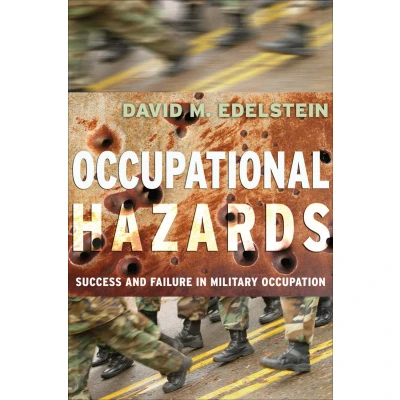
Edelstein elucidates the occasional successes of military occupations and their more frequent failures through 26 cases since 1815 in which an outside power seized control of a territory where the occupying party had no long-term claim on sovereignty. Few would contest that the U.S. occupation of Iraq is a clear example of just how fraught a military occupation can become. In Occupational Hazards, David M. Edelstein elucidates the occasional successes of military occupations and their more frequent failures. Edelstein has identified twenty-six cases since 1815 in which an outside power seized control of a territory where the occupying party had no long-term claim on sovereignty. In a book that has implications for present-day policy, he draws evidence from such historical cases as well as from four current occupations—Bosnia, Kosovo, Afghanistan, and Iraq—where the outcome is not yet known. Occupation is difficult, in Edelstein's view, because ambitious goals require considerable time and resources, yet both the occupied population and the occupying power want occupation to end quickly and inexpensively; in drawn-out occupations, impatience grows and resources dwindle. This combination sabotages the occupying power's ability to accomplish two tasks: convince an occupied population to suppress its nationalist desires and sustain its own commitment to the occupation. Structural conditions and strategic choices play crucial roles in the success or failure of an occupation. In describing those factors, Edelstein prescribes a course of action for the future.
 Productspecificaties
| EAN |
|
|---|---|
| Maat |
|
 Prijshistorie
 Prijzen voor het laatst bijgewerkt op:
 Gerelateerde resultaten


