


€ 33,99 Gratis verzending

Uitgelicht
|
|
33,99 |
Naar shop
|

|
64,53 |
Naar shop
|
| VERGELIJK ALLE AANBIEDERS (2) | ||
 Beschrijving
Vergelijk aanbieders (2)
€ 33,99 Gratis verzending
€ 64,53 € 4,94 verzendkosten Totaal € 69,47
Winkels met andere maten
Beschrijving
(1)
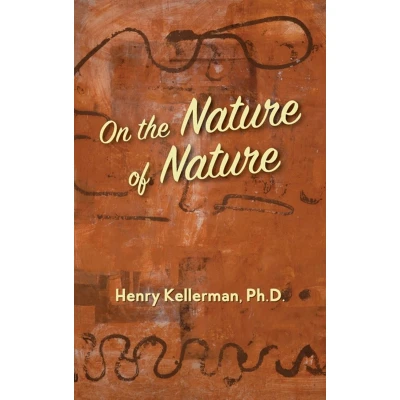
On the Nature of Nature presents a groundbreaking psychological exploration of humanity's fundamental relationship with the natural world. Drawing from six decades of clinical experience, Dr. Henry Kellerman ventures into uncharted intellectual territory by anthropomorphizing Nature itself, examining it not as a collection of phenomena to be studied, but as a force with its own discernible "personality."This transdisciplinary work reveals a provocative thesis: that all human scientific endeavor, from physics to psychology, stems not from pure curiosity but from our primal drive to control Nature for the sake of safety and survival. Kellerman argues that we experience Nature as fundamentally dangerous and unpredictable, making our relationship with it one of necessary conquest rather than peaceful coexistence.Through the lens of psychoanalytic theory, evolutionary science, and catastrophe theory, the author examines Nature's "innate disposition, "focusing on the inanimate forces of geology, chemistry, and physics rather than the romanticized vision of wildlife and scenic beauty. He draws on insights from Adam Phillips, who describes Nature as "unremittingly cruel" and "sponsored by destruction and suffering," to build a compelling case for understanding Nature's psychological profile.The book synthesizes knowledge across multiple disciplines, such as psychology, geology, evolutionary biology, and neuroscience, to construct what Kellerman calls Nature's "DNA of personality." From earthquake prediction to disease conquest, from evolutionary adaptation to space exploration, the author demonstrates how every scientific pursuit ultimately serves our need for control and safety. This ambitious intellectual project offers readers a radically new framework for understanding why we study the natural world and what our scientific pursuits reveal about our deepest fears and desires.Written for scholars, students, and intellectually curious readers interested in the intersection of science and psychology, this work challenges conventional thinking about the nature of scientific inquiry itself. It stands as both a philosophical treatise and a practical examination of how we might transform our relationship with the forces that govern existence. Kellerman's bold anthropomorphizing of "rocks, not butterflies" creates an entirely new lens through which to view the eternal human struggle for safety in an unpredictable universe.
 Prijshistorie
 * Prijshistorie bevat geen data van Amazon.
Prijzen voor het laatst bijgewerkt op:
 Gerelateerde resultaten
 Productspecificaties


