


€ 46,99 Gratis verzending

Uitgelicht
|
|
46,99 |
Naar shop
|

|
53,44 |
Naar shop
|

|
53,44 |
Naar shop
|
| VERGELIJK ALLE AANBIEDERS (3) | ||
 Beschrijving
Vergelijk aanbieders (3)
€ 46,99 Gratis verzending
€ 53,44 Gratis verzending
€ 53,44 Gratis verzending
Winkels met andere maten
Beschrijving
(1)
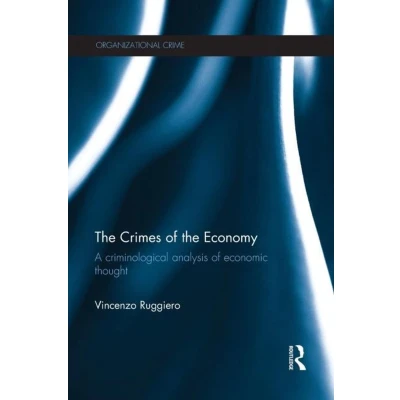
Economists have often paid visits to the field of criminology, examining the rational logic of offending. This book returns the visit, examining how the logic of economics may lead to harmful behaviour. This is an excursion into several schools of economic thought and an analysis of the social harm caused by homo oeconomicus. Economists have often paid visits to the field of criminology, examining the rational logic of offending. When economists examine criminal activity, they imply that offenders should be treated like any other social actor making rational choices. In The Crimes of the Economy, Vincenzo Ruggiero turns the tables by examining a variety of economic schools of thought from a criminological perspective. Each one of these schools, he argues, justifies or even encourages harm produced by economic initiative. He investigates – among others – John Locke’s notion of private property, Mercantilism, the Physiocrats and Malthus, and the arguments of Adam Smith, Marshall, Keynes and neoliberalism. In each of these, the author identifies the potential justification of different forms of ‘crimes of the economy’ and victimisation. This book re-examines the history of economic thought, assessing it as the history of a discipline which, while attempting to gain scientific status, in reality seeks to make the social harm caused by economics acceptable. The book will be interesting and relevant to students and scholars of social theory, criminology, economics, philosophy and politics.
 Prijshistorie
 * Prijshistorie bevat geen data van Amazon, Amazon Marketplace.
Prijzen voor het laatst bijgewerkt op:
 Gerelateerde resultaten
 Productspecificaties


