


€ 73,99 Gratis verzending

Uitgelicht
|
|
73,99 |
Naar shop
|
| VERGELIJK ALLE AANBIEDERS (1) | ||
 Beschrijving
Vergelijk aanbieders (1)
€ 73,99 Gratis verzending
Winkels met andere maten
Beschrijving
(1)
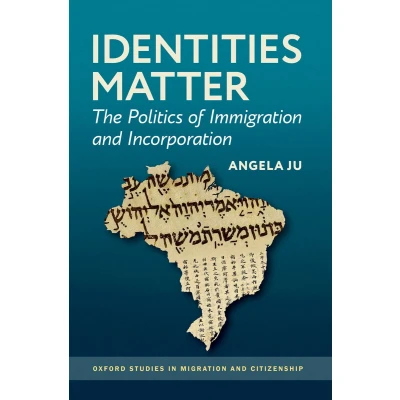
Grandchildren of immigrants belonging to groups that have achieved high socioeconomic status choose which identities to leverage in the host country's political arena. The scholarship about political incorporation often assumes that immigrant groups and their descendants find it in their best interest to pursue mainstream political incorporation. Those immigrants who belong to ethnic minority groups might choose to engage politically in a number of ways, depending on their racial or economic status; Identities Matter: The Politics of Immigration and Incorporation looks at how descendants of minoritized groups who have achieved, generally speaking, high socioeconomic status choose to identify politically in their adopted nations. Contrary to many expectations about political and social incorporation of immigrants, it finds that assimilation is not necessarily advantageous for groups who are from or associated with countries that are more economically developed than their host country. When this is the case, these immigrant communities may choose to strategically associate themselves with the heritage country over the one in which they reside. The book draws on original research among third-generation Japanese and Jewish Brazilians to determine the seemingly paradoxical ways in which the descendants of immigrants choose which identities to emphasize in the political arena. It shows that immigrant communities' strategies of political incorporation and social integration are framed within where they fall in existing ethno-racial and socioeconomic hierarchies, and that perceptions of discrimination drive third-generation descendants to vote in line with their ethnic interests. One particularly interesting finding is that in Brazil, a country that suffers from high levels of political corruption, Japanese Brazilian politicians are often incentivized to emphasize their Japanese-ness over their Brazilian-ness to convey to voters that they are more honest as political candidates than their "more Brazilian" opponents. Finally, ethnic community-based organizations allow these groups to leverage their identities transnationally.
 Productspecificaties
| EAN |
|
|---|---|
| Maat |
|
 Prijshistorie
 Prijzen voor het laatst bijgewerkt op:
 Gerelateerde resultaten


