
People and Piety: Protestant Devotional Identities in Early Modern England: 11
Uitgelicht

|
28,99 |
Naar shop
|
| VERGELIJK ALLE AANBIEDERS (1) | ||
 Beschrijving
Bol
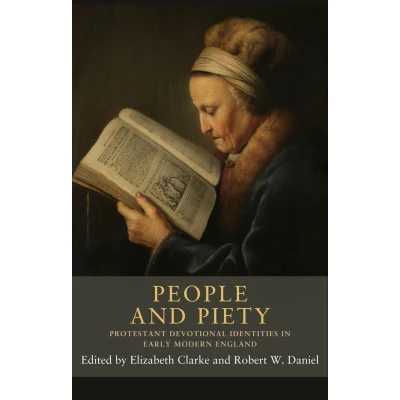
This compelling collection examines the ‘lived devotion’ of men and women in England’s Long Reformation. Through cutting-edge research, fourteen chapters explore how English piety was at once segregational and social, fixed in principle yet fluid in practice, and where authors worked out their faith in painstaking and sometimes painful ways. In 1615, clergyman Jeremiah Dyke exclaimed ‘surely wee never beginne to know Divinitie or Religion, till wee come to know our selves.’ His clarion call, along with the ‘devotional turn’ in early modern historiography, urges us to look again at how ordinary men and women lived out their faith during extraordinary times. People and piety is an interdisciplinary collection that investigates Protestant devotional identities in sixteenth- and seventeenth-century England. Divided into two sections, it examines the ‘sites’ where these identities were forged (the academy, printing house, household, theatre and prison) and the ‘types’ of texts that expressed them (spiritual autobiographies, religious poetry and writings tied to the ars moriendi). The picture of ‘lived religion’ that emerges takes in such familiar figures of England’s Long Reformation as George Herbert, Richard Baxter, Oliver Heywood and Katherine Sutton, while also shedding light on some of their lesser-known contemporaries, including Isaac Archer, Mary Franklin and Katherine Gell. Through cutting-edge and archival research, the book shows that piety did not define people – it was people who defined their piety. Featuring a mixture of established and emerging scholars from both sides of the Atlantic, People and piety will be of interest to those studying and teaching religion and identity in early modern England, and anyone concerned with the history of religious self-expression. This international and interdisciplinary volume investigates Protestant devotional identities in sixteenth- and seventeenth-century England. Divided into two sections, the book examines the ‘sites’ where these identities were forged – the academy, printing house, household, theatre and prison – and the ‘types’ of texts that expressed them – spiritual autobiographies, religious poetry and writings tied to the ars moriendi – providing a broad analysis of social, material and literary forms of devotion during England’s Long Reformation. Through archival and cutting-edge research, a detailed picture of ‘lived religion’ emerges, which re-evaluates the pietistic acts and attitudes of well-known and recently discovered figures. To those studying and teaching religion and identity in early modern England, and anyone interested in the history of religious self-expression, these chapters offer a rich and rewarding read.


Vergelijk aanbieders (1)

 Beschrijving
(1)
Beschrijving
(1)
This compelling collection examines the ‘lived devotion’ of men and women in England’s Long Reformation. Through cutting-edge research, fourteen chapters explore how English piety was at once segregational and social, fixed in principle yet fluid in practice, and where authors worked out their faith in painstaking and sometimes painful ways. In 1615, clergyman Jeremiah Dyke exclaimed ‘surely wee never beginne to know Divinitie or Religion, till wee come to know our selves.’ His clarion call, along with the ‘devotional turn’ in early modern historiography, urges us to look again at how ordinary men and women lived out their faith during extraordinary times. People and piety is an interdisciplinary collection that investigates Protestant devotional identities in sixteenth- and seventeenth-century England. Divided into two sections, it examines the ‘sites’ where these identities were forged (the academy, printing house, household, theatre and prison) and the ‘types’ of texts that expressed them (spiritual autobiographies, religious poetry and writings tied to the ars moriendi). The picture of ‘lived religion’ that emerges takes in such familiar figures of England’s Long Reformation as George Herbert, Richard Baxter, Oliver Heywood and Katherine Sutton, while also shedding light on some of their lesser-known contemporaries, including Isaac Archer, Mary Franklin and Katherine Gell. Through cutting-edge and archival research, the book shows that piety did not define people – it was people who defined their piety. Featuring a mixture of established and emerging scholars from both sides of the Atlantic, People and piety will be of interest to those studying and teaching religion and identity in early modern England, and anyone concerned with the history of religious self-expression. This international and interdisciplinary volume investigates Protestant devotional identities in sixteenth- and seventeenth-century England. Divided into two sections, the book examines the ‘sites’ where these identities were forged – the academy, printing house, household, theatre and prison – and the ‘types’ of texts that expressed them – spiritual autobiographies, religious poetry and writings tied to the ars moriendi – providing a broad analysis of social, material and literary forms of devotion during England’s Long Reformation. Through archival and cutting-edge research, a detailed picture of ‘lived religion’ emerges, which re-evaluates the pietistic acts and attitudes of well-known and recently discovered figures. To those studying and teaching religion and identity in early modern England, and anyone interested in the history of religious self-expression, these chapters offer a rich and rewarding read.
 Productspecificaties
| EAN |
|
|---|---|
| Maat |
|
 Prijshistorie
Prijzen voor het laatst bijgewerkt op:
 Gerelateerde resultaten


