


€ 103,00 Gratis verzending

Uitgelicht
|
|
103,00 |
Naar shop
|

|
192,99 |
Naar shop
|
| VERGELIJK ALLE AANBIEDERS (2) | ||
 Beschrijving
Vergelijk aanbieders (2)
€ 103,00 Gratis verzending
€ 192,99 Gratis verzending
Winkels met andere maten
Beschrijving
(1)
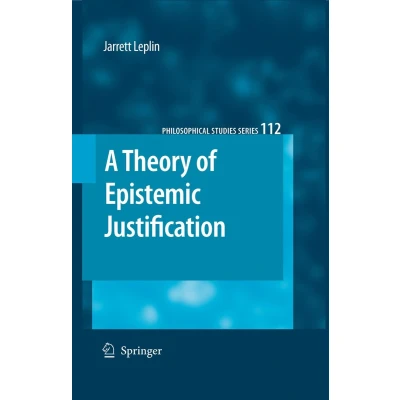
Having taken a position on this question (1997), - guing that justi cation extends to theoretical hypotheses, I came to wonder about the nature of justi cation generally. Now that I know that just- cation extends to theory, I am taking a step back and asking what justi cation is. This book proposes an original theory of epistemic justification that offers a new way to relate justification to the epistemic goal of truth-conducive belief. The theory is based on a novel analysis of reliable belief-formation that answers classic objections to reliability theories in epistemology. The analysis generates a way of distinguishing justified belief from believing justifiedly, such that inerrant belief-formation need not be justificatory whereas systemic deception could be. It thereby respects the intuition that standards for justification must be accessible to the believer, while maintaining the essential connection of justification to truth. The analysis shows how justification relates to, but is distinct from, evidence, rationality, and probability. It provides a unifying treatment of issues central to current debate in epistemology, including epistemic paradoxes, epistemic closure, skepticism, contextualism, virtue theories, the effect of luck on knowledge and justification, the interpretation of subjunctive conditions for justification, the conflict between internalism and externalism, and metaphilosophical evaluation of epistemological theories. There are further applications to metaphysics, the philosophy of language, the philosophy of science, and ethics. The book will engage philosophers working in epistemology or related fields, and their graduate students. One goal of epistemology is to refute the skeptic. Another, with an equally dist- guished if briefer pedigree, is to make sense of science as a knowledge-acquiring enterprise. The goals are incompatible, in that the latter presupposes that the skeptic is wrong. The incompatibility is not strict. One could have both goals, conditi- ing the latter upon success at the former. In fact, however, epistemologies aimed at the skeptic tend not to get anywhere near science. They’ve got all they can handle guring out how we can know we have hands. I come to epistemology from the philosophy of science, my original interest in which was epistemological. Philosophers of science are concerned with epistemic justi cation, but their question about it is how far it extends. They take justi cation to be unproblematic at the level of ordinary experience; their worries begin with the interpretation of experience as evidence for theory. They are interested in the scope of scienti c knowledge. Having taken a position on this question (1997), - guing that justi cation extends to theoretical hypotheses, I came to wonder about the nature of justi cation generally. This is not a belated discovery of the skeptical problem or a reconsideration of what I took to be unproblematic. It is simply an interest in the possibility of locating epistemic advance in science within a broader understanding of the nature of epistemic justi cation. Now that I know that just- cation extends to theory, I am taking a step back and asking what justi cation is.
 Productspecificaties
| EAN |
|
|---|---|
| Maat |
|
 Prijshistorie
Prijzen voor het laatst bijgewerkt op:
 Gerelateerde resultaten


