


€ 119,00 Gratis verzending

Uitgelicht
|
|
119,00 |
Naar shop
|

|
129,65 |
Naar shop
|
| VERGELIJK ALLE AANBIEDERS (2) | ||
 Beschrijving
Vergelijk aanbieders (2)
€ 119,00 Gratis verzending
€ 129,65 Gratis verzending
Winkels met andere maten
Beschrijving
(1)
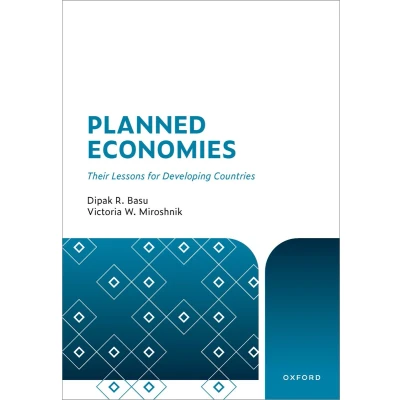
Countering the global discourse against planning and the Soviet system, Planned Economies elaborates upon the concept, objectives, theoretical background, and applications of planning in the Soviet Union and several other countries such as China, India, Hungary, and Yugoslavia. A response to the ongoing global discourse against planning and the Soviet system, Planned Economies: Their Lessons for Developing Countries focuses on the experiences that the Soviet Union and several other economies had with planning and the lessons therein. In the first part of the book, Basu and Miroshnik discuss national economic planning aimed at maximizing the welfare of the people, as it was in the Soviet Union. In the second part, they focus on the management issues of the Soviet Union and several other planned economies to explore how organizations should be managed to maximize efficiency and effectiveness for public welfare. The third part elaborates upon the experiences of countries such as Hungary, Yugoslavia, China, and India, specifically, how they developed and the crises they underwent. As income inequality creates social tensions, potentially leading to war and conflict, the main objective of a planned economy is the equal distribution of income. Combining macroeconomic welfare maximization and microeconomic efficiency maximization approaches, Basu and Miroshnik analyse the underlying philosophical dimension of these problems, as well as their practical applications, to provide insights relevant to the future of developing countries.
 Prijshistorie
 * Prijshistorie bevat geen data van Amazon.
Prijzen voor het laatst bijgewerkt op:
 Gerelateerde resultaten
 Productspecificaties


