


€ 13,00 € 2,99 verzendkosten Totaal € 15,99

Uitgelicht
|
|
13,00 |
Naar shop
|

|
38,99 |
Naar shop
|

|
38,99 |
Naar shop
|
| VERGELIJK ALLE AANBIEDERS (3) | ||
 Beschrijving
Vergelijk aanbieders (3)
€ 13,00 € 2,99 verzendkosten Totaal € 15,99
€ 38,99 Gratis verzending
€ 38,99 Gratis verzending
Winkels met andere maten
Beschrijving
(1)
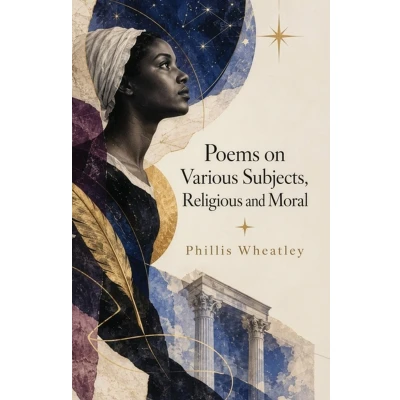
In odes, elegies, devotional poems, and public addresses, Phillis Wheatley brings Christian belief and classical learning to questions of liberty, mortality, providence, authorship, and enslavement. The collection announced a formidable poetic intelligence within a culture that demanded proof of her humanity.Published in London in 1773, the volume was the first book published by an African American woman. Its prefatory attestation, signed by prominent Bostonians, reveals the racist conditions under which Wheatley's authorship was judged. Her neoclassical forms engage patrons, public figures, biblical subjects, and classical traditions while making layered claims to intellect, spiritual equality, and literary authority.Wheatley writes within the formal language of eighteenth-century poetry, drawing on classical mythology, biblical imagery, heroic couplets, elegiac conventions, and the rhetoric of public praise. Yet those inherited forms take on additional force because of the position from which she writes. A poem addressed to a political leader, a meditation on freedom, or an expression of Christian equality carries meanings shaped not only by convention but by Wheatley's own status in a slaveholding society.Her poems move between public and private occasions: deaths, religious reflection, political events, personal loss, and appeals to patrons or leaders. Elegy becomes a means of exploring mortality and providence; classical allusion becomes evidence of education and intellectual command; religious language can affirm both humility before God and the spiritual equality of human beings.The collection is therefore important not only as a historical milestone but as a carefully crafted literary work. Wheatley's poems reward close attention to tone, allusion, rhetorical strategy, and the tension between what eighteenth-century poetic convention allowed her to say directly and what could be implied through form, address, and imagery.Read within the religious, political, and literary world of the eighteenth-century Atlantic, Poems on Various Subjects, Religious and Moral reveals a writer working with extraordinary discipline inside severe social constraints. Its historical significance is inseparable from its artistry: Wheatley's achievement lies not simply in having published, but in the intelligence, control, and complexity with which she entered a literary culture that was prepared to doubt her before reading a single line.
 Prijshistorie
 * Prijshistorie bevat geen data van Amazon, Amazon Marketplace.
Prijzen voor het laatst bijgewerkt op:
 Gerelateerde resultaten
 Productspecificaties


