

€ 11,27 Gratis verzending

Uitgelicht
|
|
11,27 |
Naar shop
|

|
11,27 |
Naar shop
|

|
13,00 |
Naar shop
|
| VERGELIJK ALLE AANBIEDERS (3) | ||
 Beschrijving
Vergelijk aanbieders (3)
€ 11,27 Gratis verzending
€ 11,27 Gratis verzending
€ 13,00 € 2,99 verzendkosten Totaal € 15,99
Winkels met andere maten
Beschrijving
(1)
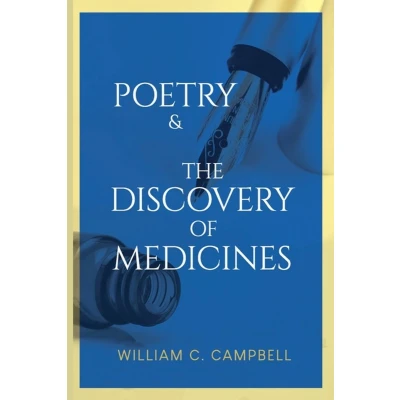
Two essays. One slim volume. A mind equally at home in the laboratory and in literary exploration. A Nobel laureate turns his attention to two subjects that could hardly seem farther apart - and finds in each a case for wonder and rigor. The first essay, "Poetry," moves between reflection and memoir as the author weighs the qualities that give poetry its force. He asserts that poetry requires the proffering of a thought or emotion, and discusses the adoption of Persona. He threads in personal recollections that show how a scientific life and a poetic sensibility are not only compatible but also enrich each other. The second, "The Discovery of Medicines," is a bracing piece of advocacy. Drawing on a career at the frontier of drug discovery - including the work on ivermectin, the antiparasitic that treats river blindness in humans and earned the 2015 Nobel Prize in Medicine - the author advocates the "empirical" method: that testing natural samples gathered from every corner of the world has, again and again, outperformed the "rational" approach of designing a cure and trying to build it in the lab. History, he argues, is overwhelmingly on the side of the empiricists. To neglect a method so demonstrably effective is, he contends, not merely a scientific oversight but a human and moral failing. Intellectually serious yet genuinely readable, these essays are both enjoyable and compelling. At just 29 pages the book can be read in a single sitting - but its underlying concepts linger far longer.
 Prijshistorie
 * Prijshistorie bevat geen data van Amazon, Amazon Marketplace.
Prijzen voor het laatst bijgewerkt op:
 Gerelateerde resultaten
 Productspecificaties


