


€ 49,99 Gratis verzending

Uitgelicht
|
|
49,99 |
Naar shop
|

|
135,99 |
Naar shop
|
| VERGELIJK ALLE AANBIEDERS (2) | ||
 Beschrijving
Vergelijk aanbieders (2)
€ 49,99 Gratis verzending
€ 135,99 Gratis verzending
Winkels met andere maten
Beschrijving
(1)
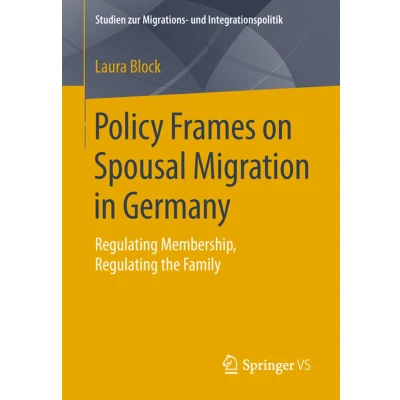
Laura Block asks how liberal democracies manage torestrict migration in spite of liberal constraints. She analyses the politicaldebates surrounding spousal migration policies from 2005–2010 in Germany andreveals government strategies that restrict spousal migration while stayingwithin the discursive realm of individual rights. Laura Block asks how liberal democracies manage to restrict migration in spite of liberal constraints. She analyses the political debates surrounding spousal migration policies from 2005–2010 in Germany and reveals government strategies that restrict spousal migration while staying within the discursive realm of individual rights. By circumscribing and scrutinising both the membership status necessary to access the right to family protection and the family ties in question, restricting spousal migration is legitimised. Contents A theoretical framework for the analysis of spousal migration policies Empirical and legal realities of spousal migration to Germany The European dimension of family migration policies Political and institutional frames on spousal migration The “other” side: transnational couples’ and migrant advocates’ perspectives Target Groups Researchers and students dealing with migration studies, policy and discourse analysis The Author Laura Block works as a project coordinator for Arbeitsgemeinschaft der deutschen Familienorganisationen (AGF), Berlin. Laura Block asks how liberal democracies manage to restrict migration in spite of liberal constraints. She analyses the political debates surrounding spousal migration policies from 2005–2010 in Germany and reveals government strategies that restrict spousal migration while staying within the discursive realm of individual rights. By circumscribing and scrutinising both the membership status necessary to access the right to family protection and the family ties in question, restricting spousal migration is legitimised.
 Productspecificaties
| EAN |
|
|---|---|
| Maat |
|
 Prijshistorie
Prijzen voor het laatst bijgewerkt op:
 Gerelateerde resultaten


