


€ 48,99 Gratis verzending

Uitgelicht
|
|
48,99 |
Naar shop
|

|
130,99 |
Naar shop
|
| VERGELIJK ALLE AANBIEDERS (2) | ||
 Beschrijving
Vergelijk aanbieders (2)
€ 48,99 Gratis verzending
€ 130,99 Gratis verzending
Winkels met andere maten
Beschrijving
(1)
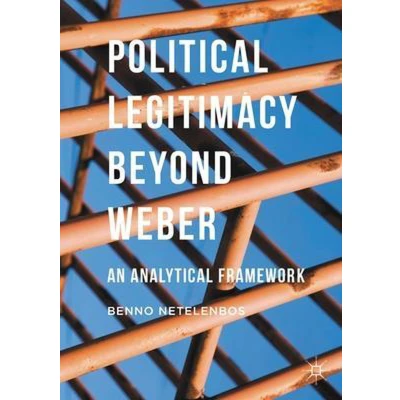
Based upon thesedifferent conceptualisations of politics andby critically evaluating some of the most leading sociologies, Netelenbospresents four analytical perspectives of political legitimacy. Legitimacy is an essential concept in politics. But what is it? This book seeks to answer this question through adopting Weber’s sociological approach to legitimacy. Weber argues that we should not only understand legitimacy from the perspective of the political order, but that we should also look at its subjective meaning. If this approach seems to have fallen into discredit since Weber formulated it almost a century ago, Netelenbos argues that we need to bring back the subjective into political sociology and theory. Political Legitimacy beyond Weber argues that contemporary politics in late-modern society cannot merely be understood in terms of legitimate domination or formal bureaucratic organisation. Politics is also about strategic conflict, coordination and argumentation. Based upon these different conceptualisations of politics and by critically evaluating some of the most leading sociologies, Netelenbos presents four analytical perspectives of political legitimacy. Providing crucial insights into the multiple dimensions of political legitimacy, this will be an essential tool for both empirical and normative research. Legitimacy is an essential concept in politics. But what is it? This book seeks to answer this question through adopting Weber’s sociological approach to legitimacy. Weber argues that we should not only understand legitimacy from the perspective of the political order, but that we should also look at its subjective meaning. If this approach seems to have fallen into discredit since Weber formulated it almost a century ago, Netelenbos argues that we need to bring back the subjective into political sociology and theory. Political Legitimacy beyond Weber argues that contemporary politics in late-modern society cannot merely be understood in terms of legitimate domination or formal bureaucratic organisation. Politics is also about strategic conflict, coordination and argumentation. Based upon these different conceptualisations of politics and by critically evaluating some of the most leading sociologies, Netelenbos presents four analytical perspectives of political legitimacy. Providing crucial insights into the multiple dimensions of political legitimacy, this will be an essential tool for both empirical and normative research.
 Productspecificaties
| EAN |
|
|---|---|
| Maat |
|
 Prijshistorie
Prijzen voor het laatst bijgewerkt op:
 Gerelateerde resultaten


