
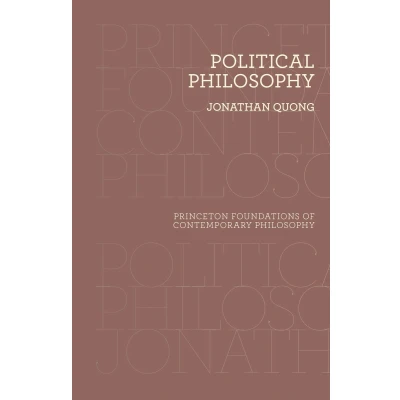
Political Philosophy: The Puzzle of Legitimate Injustice
Uitgelicht

|
28,99 |
Naar shop
|

|
31,13 |
Naar shop
|

|
31,13 |
Naar shop
|
| VERGELIJK ALLE AANBIEDERS (3) | ||
 Beschrijving
Bol
How to understand a long-standing puzzle in political philosophy: the relationship between justice and legitimacyCan laws be unjust and yet remain, in some sense, morally legitimate? In this book, Jonathan Quong considers central issues in political philosophy through the lens of this single question. He explores and evaluates recent influential work on this topic and then proposes a novel approach of his own. The puzzle at the heart of his account is the phenomenon of legitimate injustice—laws and policies that are substantively unjust yet may be legitimately imposed by government officials. How can such laws be legitimate if, as some have argued, justice is the first virtue of social institutions?Quong analyzes the work of those who deny that injustice committed by states can be legitimate simply by virtue of its democratic or procedural pedigree; the Kantian account of legitimate institutions and justice; instrumental approaches to political legitimacy; and the recent wave of work in democratic theory focused on its egalitarian character. Arguing that these analyses do not offer an adequate solution to the puzzle and that there are compelling reasons to revise or reject them, Quong lays out his view and explains the implications for more general theories of political morality. He argues that we can explain legitimate injustice by appeal to distributive justice. If political disagreement is inevitable, then unjust legislation is largely unavoidable; it constitutes a burden that must be distributed according to just principles. Quong’s novel and illuminating framework offers a unique introduction to crucial questions in political philosophy.


 Beschrijving
(1)
Beschrijving
(1)
How to understand a long-standing puzzle in political philosophy: the relationship between justice and legitimacyCan laws be unjust and yet remain, in some sense, morally legitimate? In this book, Jonathan Quong considers central issues in political philosophy through the lens of this single question. He explores and evaluates recent influential work on this topic and then proposes a novel approach of his own. The puzzle at the heart of his account is the phenomenon of legitimate injustice—laws and policies that are substantively unjust yet may be legitimately imposed by government officials. How can such laws be legitimate if, as some have argued, justice is the first virtue of social institutions?Quong analyzes the work of those who deny that injustice committed by states can be legitimate simply by virtue of its democratic or procedural pedigree; the Kantian account of legitimate institutions and justice; instrumental approaches to political legitimacy; and the recent wave of work in democratic theory focused on its egalitarian character. Arguing that these analyses do not offer an adequate solution to the puzzle and that there are compelling reasons to revise or reject them, Quong lays out his view and explains the implications for more general theories of political morality. He argues that we can explain legitimate injustice by appeal to distributive justice. If political disagreement is inevitable, then unjust legislation is largely unavoidable; it constitutes a burden that must be distributed according to just principles. Quong’s novel and illuminating framework offers a unique introduction to crucial questions in political philosophy.
 Productspecificaties
 Prijshistorie
* Prijshistorie bevat geen data van Amazon, Amazon Marketplace.
Prijzen voor het laatst bijgewerkt op:
 Gerelateerde resultaten


