


€ 34,99 Gratis verzending

Uitgelicht
|
|
34,99 |
Naar shop
|

|
42,59 |
Naar shop
|
| VERGELIJK ALLE AANBIEDERS (2) | ||
 Beschrijving
Vergelijk aanbieders (2)
€ 34,99 Gratis verzending
€ 42,59 € 3,14 verzendkosten Totaal € 45,73
Winkels met andere maten
Beschrijving
(1)
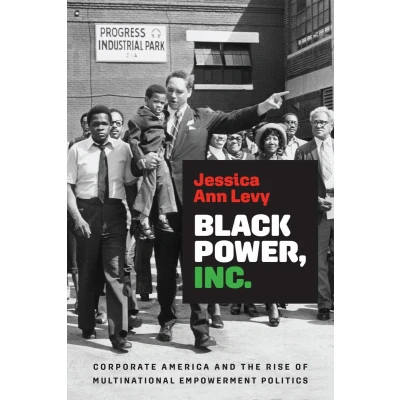
Traces the rise of Black empowerment politics in the United States and Africa On a cold January day in 1964, civil rights minister turned entrepreneur Rev. Leon Howard Sullivan declared to a group of supporters gathered to witness the launch of Sullivan's latest venture, Opportunities Industrialization Centers, Inc., "The day has come when we must do more than protest—we must now also PREPARE and PRODUCE!" Occasionally linked with the movement for Black Power, Sullivan and others, including Coca-Cola vice president Carl Ware and Atlanta mayor Andrew Young, were in fact architects of Black empowerment—an intellectual and political movement that championed private enterprise as the key to Black people's prosperity.Jessica Ann Levy traces Black empowerment's rise in American politics—from early twentieth-century influences including Booker T. Washington and Marcus Garvey to the cities of postwar America into corporate boardrooms and government offices—and across the Atlantic Ocean to Africa. Civil rights leaders, Black entrepreneurs, white corporate executives, and government officials all championed Black empowerment as a means to address multiple crises in US cities and to blunt some of the more radical aspects of the Black Power movement. Black empowerment politics likewise found application overseas in various Cold War efforts to promote American-style free enterprise in Africa. This was especially the case in South Africa, where US corporate executives and government officials wielded Black empowerment politics to oppose apartheid and divestment.By the early twenty-first century, the idea that private enterprise, including small-scale entrepreneurs and large multinational corporations, should play a leading role in combating racial inequality and empowering Black and other marginalized people featured prominently in various policies and programs at the local, national, and international level. By tracing Black empowerment politics' evolution, Black Power, Inc. explains its popularity, championed by leaders from Bill Clinton to Nelson Mandela, while also revealing its role in expanding US corporate power, locally and globally.
 Prijshistorie
 * Prijshistorie bevat geen data van Amazon.
Prijzen voor het laatst bijgewerkt op:
 Gerelateerde resultaten
 Productspecificaties


