

€ 11,93 Gratis verzending

Gesponsorde links
|
|
11,93 |
Naar shop
|

|
11,93 |
Naar shop
|

|
12,50 |
Naar shop
|
| VERGELIJK ALLE AANBIEDERS (3) | ||
 Beschrijving
Vergelijk aanbieders (3)
Gesponsorde links · Sommige shops betalen ons een vergoeding
€ 11,93 Gratis verzending
€ 11,93 Gratis verzending
€ 12,50 € 2,99 verzendkosten Totaal € 15,49
Winkels met andere maten
Beschrijving
(1)
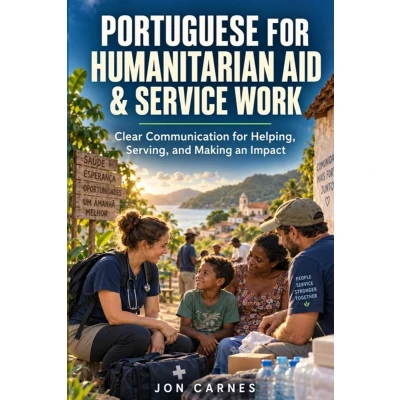
PORTUGUESE FOR HUMANITARIAN AID & SERVICE WORK Clear Communication for Helping, Serving, and Making an Impact Communication That Serves Humanitarian service begins before a box is opened, a clinic is organized, or a meal is distributed. It begins when one person looks at another and communicates, "You matter." In an unfamiliar language, even a small sentence can carry that message. A greeting spoken carefully, a question asked with patience, or an explanation given before touching a patient can replace uncertainty with trust. Clear communication saves time because people understand where to wait, what information is needed, and what will happen next. It also protects dignity. People receiving aid are not problems to be processed; they are neighbors with names, histories, responsibilities, fears, and strengths. Portuguese helps the volunteer move from speaking about people to speaking with them. This book is designed for immediate use. Each chapter combines short explanations with Portuguese models, natural English meanings, pronunciation guidance where it is most valuable, realistic dialogues, comprehension practice, role-play, translation, and personal reflection. Read the Portuguese aloud. Repeat it slowly, then at a natural pace. Replace names, places, symptoms, and quantities so that each model becomes your own. Brazilian Portuguese is the main model because Brazil has the largest Portuguese-speaking population. Portuguese is also spoken across several nations and communities, and vocabulary, rhythm, and forms of address vary. When a local colleague uses a different word, receive the correction gratefully. The goal is not to display perfect language. The goal is to understand, to be understood, and to serve wisely. In medical and crisis settings, use short sentences. Ask one question at a time. Confirm important facts by repeating them. Never pretend to understand. The sentence "Pode repetir mais devagar, por favor?"-"Could you repeat that more slowly, please?"-is a sign of responsibility, not weakness. Whenever possible, work with trained interpreters and local leaders.
 Prijshistorie
* Prijshistorie bevat geen data van Amazon, Amazon Marketplace.
Prijzen voor het laatst bijgewerkt op:
 Gerelateerde resultaten
 Productspecificaties


