

€ 16,66 Gratis verzending

Uitgelicht
|
|
16,66 |
Naar shop
|

|
16,66 |
Naar shop
|

|
17,00 |
Naar shop
|
| VERGELIJK ALLE AANBIEDERS (3) | ||
 Beschrijving
Vergelijk aanbieders (3)
€ 16,66 Gratis verzending
€ 16,66 Gratis verzending
€ 17,00 € 2,99 verzendkosten Totaal € 19,99
Winkels met andere maten
Beschrijving
(1)
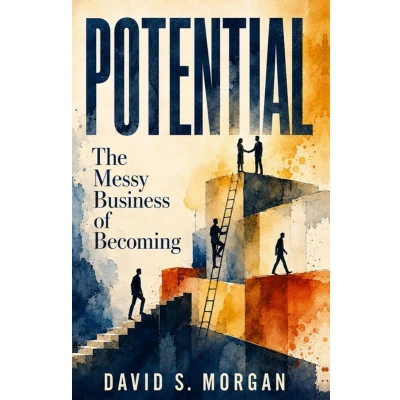
Somewhere this week, a room will decide who has potential.Eight people, four hours, sixty-one names on a screen. One name gets nine minutes and moves up. Another gets four, and someone starts to say that he was never really given the chance, gets half the sentence out, and the room moves on. Not rudely. Just at the speed a room moves.Nobody in that room did anything wrong. That is what makes the room worth a book.Organizations have to judge people. The role is open now, the market will not wait for anyone to finish becoming, and the meeting has to end with a name. But when we say someone has potential, we mean three different things at once and rarely notice: capability that already exists but has not been seen, capability that could exist with support, and capability that has not formed yet, in anyone. The first can be measured. The last cannot, for the same reason no thermometer reads tomorrow's temperature.Then comes the harder problem. Judgments about potential are not filed away and tested later. They are acted on. The promising person receives the consequential assignment, the visibility, the second chance. Years later the file is thick, and the room reads it as nature. In 1956 the Bell System ran the one study that avoided this trap, locking its assessments in a drawer so they could never touch the careers being used to test them. Every ordinary talent system is that study with the drawer open.Drawing on organizational research, historical cases, and three decades of leadership, David S. Morgan asks what our judgments about other people are entitled to mean, given that so much of the evidence behind them is evidence we helped create. The result is unsentimental about organizations and unsparing about its author, who spent three years judging people while accountable for a company's performance, and got some of it wrong.We do not determine what another person becomes. But we participate in making some futures more or less possible.For anyone who has sat in the room, and anyone who has been the name on the screen.
 Prijshistorie
 * Prijshistorie bevat geen data van Amazon, Amazon Marketplace.
Prijzen voor het laatst bijgewerkt op:
 Gerelateerde resultaten
 Productspecificaties


