








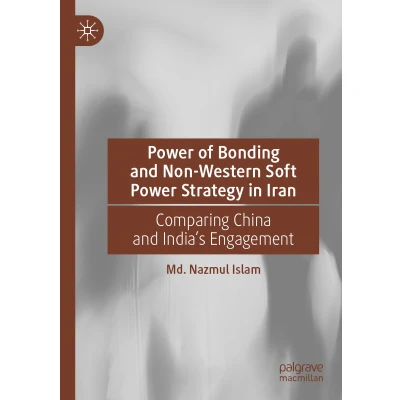
Power of Bonding and Non Western Soft Strategy in Iran
Uitgelicht

|
139,00 |
Naar shop
|
 Beschrijving
Bol
By analysing China and India’s soft power strategy in Iran, this book seeks to contribute to the soft power literature through a theoretical replication based on non-Western soft power strategy, the concept and its empirical application in China and India. This book comparatively assesses the China and India’s soft power strategy in Iran. By employing Joseph S. Nye’s “Soft Power” theory and forming the new concept of “Power of Bonding”, this book formulated China and India’s soft power narratives and applied it through the empirical analysis in Iran. Based on this theory, this book seeks explanations for the question of “ How China and India respectively, strategically and comparatively use the soft power strategy in Iran?”. To reach the find-out, this book compares the understanding, resources, strategies, influences and uses of China and India’s soft power in Iran under three thematic areas, including “power of bonding through cultural attractions, and attributions”; “political and diplomatic engagement” and “economic partnerships”. By analysing China and India’s soft power strategy in Iran, this book seeks to contribute to the soft power literature through a theoretical replication based on non-Western soft power strategy, the concept and its empirical application in China and India. Md. Nazmul Islam is Assistant Professor in the Department of Political Science and Public Administration and Head, Turkey, Asia and Indo-Pacific Studies, ULİSA, Ankara Yildirim Beyazit University. He is also an Adjunct Assistant Professor in the Department of Media and Communication Studies at the Ankara University, Turkey. This book comparatively assesses the China and India’s soft power strategy in Iran. By employing Joseph S. Nye’s “Soft Power” theory and forming the new concept of “Power of Bonding”, this book formulated China and India’s soft power narratives and applied it through the empirical analysis in Iran. Based on this theory, this book seeks explanations for the question of “How China and India respectively, strategically and comparatively use the soft power strategy in Iran?”. To reach the find-out, this book compares the understanding, resources, strategies, influences and uses of China and India’s soft power in Iran under three thematic areas, including “power of bonding through cultural attractions, and attributions”; “political and diplomatic engagement” and “economic partnerships”. By analysing China and India’s soft power strategy in Iran, this book seeks to contribute to the soft power literature through a theoretical replication based on non-Western soft power strategy, the concept and its empirical application in China and India.


Vergelijk aanbieders (1)

 Beschrijving
(1)
Beschrijving
(1)
By analysing China and India’s soft power strategy in Iran, this book seeks to contribute to the soft power literature through a theoretical replication based on non-Western soft power strategy, the concept and its empirical application in China and India. This book comparatively assesses the China and India’s soft power strategy in Iran. By employing Joseph S. Nye’s “Soft Power” theory and forming the new concept of “Power of Bonding”, this book formulated China and India’s soft power narratives and applied it through the empirical analysis in Iran. Based on this theory, this book seeks explanations for the question of “ How China and India respectively, strategically and comparatively use the soft power strategy in Iran?”. To reach the find-out, this book compares the understanding, resources, strategies, influences and uses of China and India’s soft power in Iran under three thematic areas, including “power of bonding through cultural attractions, and attributions”; “political and diplomatic engagement” and “economic partnerships”. By analysing China and India’s soft power strategy in Iran, this book seeks to contribute to the soft power literature through a theoretical replication based on non-Western soft power strategy, the concept and its empirical application in China and India. Md. Nazmul Islam is Assistant Professor in the Department of Political Science and Public Administration and Head, Turkey, Asia and Indo-Pacific Studies, ULİSA, Ankara Yildirim Beyazit University. He is also an Adjunct Assistant Professor in the Department of Media and Communication Studies at the Ankara University, Turkey. This book comparatively assesses the China and India’s soft power strategy in Iran. By employing Joseph S. Nye’s “Soft Power” theory and forming the new concept of “Power of Bonding”, this book formulated China and India’s soft power narratives and applied it through the empirical analysis in Iran. Based on this theory, this book seeks explanations for the question of “How China and India respectively, strategically and comparatively use the soft power strategy in Iran?”. To reach the find-out, this book compares the understanding, resources, strategies, influences and uses of China and India’s soft power in Iran under three thematic areas, including “power of bonding through cultural attractions, and attributions”; “political and diplomatic engagement” and “economic partnerships”. By analysing China and India’s soft power strategy in Iran, this book seeks to contribute to the soft power literature through a theoretical replication based on non-Western soft power strategy, the concept and its empirical application in China and India.
 Productspecificaties
| EAN |
|
|---|---|
| Maat |
|
 Prijshistorie
Prijzen voor het laatst bijgewerkt op:
 Gerelateerde resultaten


