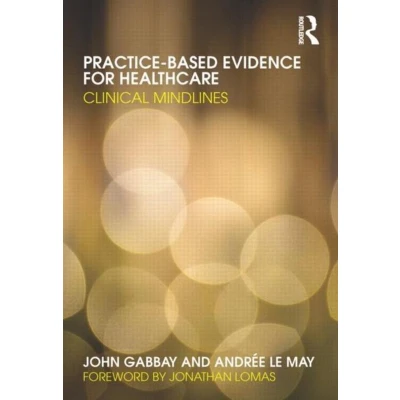

Praktijkgebaseerd Bewijs Voor Gezondheidszorg

Prijzen vanaf
22,39

Uitgelicht

VERGELIJK ALLE AANBIEDERS (2)

Beschrijving

Bol Partner Despite its ‘gold-standard’ status, the EBP movement is faltering because, while much effort has gone into developing an idealised model of the way clinicians ought to use best evidence, there is less understanding of why they often don’t. This book examines how clinicians do actually develop and use clinical knowledge. This book challenges the evidence-based practice movement to re-think its assumptions. Firmly rooted in real practice while drawing lucidly on a great breadth of theoretical frameworks, it examines afresh how clinicians use knowledge. Evidence-based practice has recently become a key part of the training of all health professionals. Yet despite its ‘gold-standard’ status, it is faltering because too much effort has gone into insisting on an idealised model of how clinicians ought to use the best evidence, while not enough has been done to understand why they so often don’t. Practice-based Evidence for Healthcare is a groundbreaking attempt to redress that imbalance. Examining how clinicians actually develop and use clinical knowledge day-to-day, the authors conclude that they use ‘mindlines’– internalised, collectively reinforced, tacit guidelines. Mindlines embody the composite and flexible knowledge that clinicians need in practice. They are built up during training and continually updated from a wide range of formal and informal sources. Before new evidence becomes part of practitioners’ mindlines, it is transformed by their interactions with colleagues and patients via their communities of practice and networks of trusted colleagues. To explore how mindlines work Gabbay and le May draw on a wide range of disciplines to analyse their detailed observations of clinical practice in the UK and the US. Their conclusions and provocative recommendations will be of value to all practitioners, health service managers, policymakers, researchers, educators and students involved in the promotion of evidence-based practice.

Vergelijk aanbieders (2)

Shop
Prijs
Verzendkosten
Totale prijs
22,39
gebruikt
Gratis
22,39
Naar shop
Gratis Shipping Costs
58,84
Gratis
58,84
Naar shop
Gratis Shipping Costs
Beschrijving (2)
Bol Partner

Despite its ‘gold-standard’ status, the EBP movement is faltering because, while much effort has gone into developing an idealised model of the way clinicians ought to use best evidence, there is less understanding of why they often don’t. This book examines how clinicians do actually develop and use clinical knowledge. This book challenges the evidence-based practice movement to re-think its assumptions. Firmly rooted in real practice while drawing lucidly on a great breadth of theoretical frameworks, it examines afresh how clinicians use knowledge. Evidence-based practice has recently become a key part of the training of all health professionals. Yet despite its ‘gold-standard’ status, it is faltering because too much effort has gone into insisting on an idealised model of how clinicians ought to use the best evidence, while not enough has been done to understand why they so often don’t. Practice-based Evidence for Healthcare is a groundbreaking attempt to redress that imbalance. Examining how clinicians actually develop and use clinical knowledge day-to-day, the authors conclude that they use ‘mindlines’– internalised, collectively reinforced, tacit guidelines. Mindlines embody the composite and flexible knowledge that clinicians need in practice. They are built up during training and continually updated from a wide range of formal and informal sources. Before new evidence becomes part of practitioners’ mindlines, it is transformed by their interactions with colleagues and patients via their communities of practice and networks of trusted colleagues. To explore how mindlines work Gabbay and le May draw on a wide range of disciplines to analyse their detailed observations of clinical practice in the UK and the US. Their conclusions and provocative recommendations will be of value to all practitioners, health service managers, policymakers, researchers, educators and students involved in the promotion of evidence-based practice.

Bol

This book challenges the evidence-based practice movement to re-think its assumptions. Firmly rooted in real practice while drawing lucidly on a great breadth of theoretical frameworks, it examines afresh how clinicians use knowledge. Evidence-based practice has recently become a key part of the training of all health professionals. Yet despite its ‘gold-standard’ status, it is faltering because too much effort has gone into insisting on an idealised model of how clinicians ought to use the best evidence, while not enough has been done to understand why they so often don’t. Practice-based Evidence for Healthcare is a groundbreaking attempt to redress that imbalance. Examining how clinicians actually develop and use clinical knowledge day-to-day, the authors conclude that they use ‘mindlines’– internalised, collectively reinforced, tacit guidelines. Mindlines embody the composite and flexible knowledge that clinicians need in practice. They are built up during training and continually updated from a wide range of formal and informal sources. Before new evidence becomes part of practitioners’ mindlines, it is transformed by their interactions with colleagues and patients via their communities of practice and networks of trusted colleagues. To explore how mindlines work Gabbay and le May draw on a wide range of disciplines to analyse their detailed observations of clinical practice in the UK and the US. Their conclusions and provocative recommendations will be of value to all practitioners, health service managers, policymakers, researchers, educators and students involved in the promotion of evidence-based practice.


Productspecificaties

EAN
  • 9780415486699
  • 9781136888373
Maat


Prijshistorie

Prijzen voor het laatst bijgewerkt op:

Uitgelichte Keuze
22,39
Naar shop
