

€ 15,63 Gratis verzending

Gesponsorde links
|
|
15,63 |
Naar shop
|

|
15,63 |
Naar shop
|

|
17,00 |
Naar shop
|
| VERGELIJK ALLE AANBIEDERS (3) | ||
 Beschrijving
Vergelijk aanbieders (3)
Gesponsorde links · Sommige shops betalen ons een vergoeding
€ 15,63 Gratis verzending
€ 15,63 Gratis verzending
€ 17,00 € 2,99 verzendkosten Totaal € 19,99
Winkels met andere maten
Beschrijving
(1)
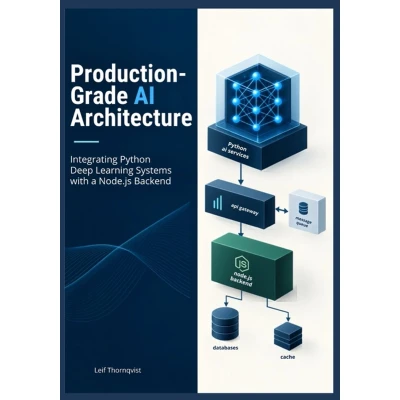
How do you turn powerful Python deep learning models into reliable production systems? Building an AI model is only half the challenge. The real engineering work begins when that model must serve real users, handle unpredictable traffic, communicate with a web application, and remain secure, observable, and resilient. Production-Grade AI Architecture provides a practical architectural guide to integrating Python deep learning systems with a Node.js backend. It explores the critical boundary between machine learning infrastructure and application engineering, showing how the two ecosystems can work together without creating fragile or difficult-to-maintain systems. Inside, you'll explore: - REST, gRPC, Protobuf, and message queues for reliable AI communication- Node.js API gateways for validation, routing, aggregation, and rate limiting- Redis and BullMQ for asynchronous deep learning workloads- FastAPI and Flask services for exposing Python models to Node.js- Semantic caching and distributed state management to reduce unnecessary computation- Circuit breakers, fallbacks, retries, and graceful degradation for resilient AI systems- mTLS, PII protection, RBAC, and auditing across AI service boundaries- OpenTelemetry, Grafana, and Datadog for full-stack observability- Docker, GitHub Actions, integration testing, and shadow deployments for production deliveryWhether you're designing an AI API, deploying deep learning inference, or building a hybrid Python-Node.js architecture, this book gives you a structured way to think about the systems surrounding your models. Move beyond model prototypes and start engineering AI systems designed for production.
 Prijshistorie
* Prijshistorie bevat geen data van Amazon, Amazon Marketplace.
Prijzen voor het laatst bijgewerkt op:
 Gerelateerde resultaten
 Productspecificaties


