

€ 43,90 Gratis verzending

Uitgelicht
|
|
43,90 |
Naar shop
|

|
43,90 |
Naar shop
|
| VERGELIJK ALLE AANBIEDERS (2) | ||
 Beschrijving
Vergelijk aanbieders (2)
€ 43,90 Gratis verzending
€ 43,90 Gratis verzending
Winkels met andere maten
Beschrijving
(1)
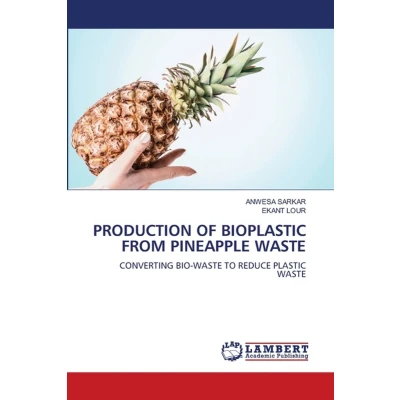
Starch-based bio-plastics are a sustainable and biodegradable alternative to conventional plastics. In this study, bio-plastic was prepared using starch as the binding agent and glycerol as the plasticizer, with cellulose as a reinforcing material. Cellulose was extracted from pineapple leaf fibre (PALF), an abundant agricultural waste, through fibre pre-treatment, bleaching, and acid hydrolysis. The pre-treatment of PALF was carried out to improve fibre-matrix adhesion and enhance the mechanical properties of the bio-plastic, particularly tensile and impact strength, as well as durability and water resistance. The bio-plastic was fabricated by heating a mixture of corn flour, vinegar, glycerol, and distilled water at 80-90 °C for 60 minutes with continuous stirring, followed by casting and drying at 70-80 °C for 6-8 hours to obtain a uniform film. The final bio-plastic sheets were conditioned at room temperature and evaluated through water solubility, soil degradation, water absorption, thickness measurement, and hardness tests to assess their physical properties and practical applicability.
 Prijshistorie
 * Prijshistorie bevat geen data van Amazon.
Prijzen voor het laatst bijgewerkt op:
 Gerelateerde resultaten
 Productspecificaties


