


€ 89,67 Gratis verzending

Uitgelicht
|
|
89,67 |
Naar shop
|

|
126,99 |
Naar shop
|
| VERGELIJK ALLE AANBIEDERS (2) | ||
 Beschrijving
Vergelijk aanbieders (2)
€ 89,67 Gratis verzending
€ 126,99 Gratis verzending
Winkels met andere maten
Beschrijving
(1)
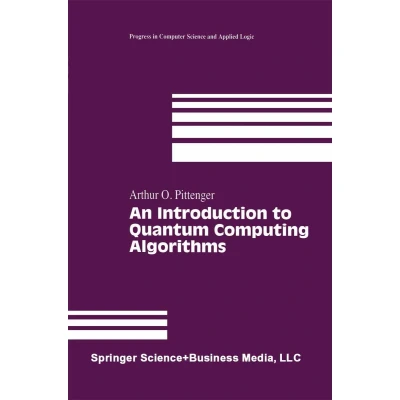
In 1994 Peter Shor [65] published a factoring algorithm for a quantum computer that finds the prime factors of a composite integer N more efficiently than is possible with the known algorithms for a classical com puter. The purpose of this monograph is to provide the mathematically literate reader with an accessible introduction to the theory of quantum computing algorithms, one component of a fascinating and rapidly developing area which involves topics from physics, mathematics, and computer science. The author briefly describes the historical context of quantum computing and provides the motivation, notation, and assumptions appropriate for quantum statics, a non-dynamical, finite dimensional model of quantum mechanics. This model is then used to define and illustrate quantum logic gates and representative subroutines required for quantum algorithms. A discussion of the basic algorithms of Simon and of Deutsch and Jozsa sets the stage for the presentation of Grover's search algorithm and Shor's factoring algorithm, key algorithms which crystallized interest in the practicality of quantum computers. A group theoretic abstraction of Shor's algorithms completes the discussion of algorithms. The last third of the book briefly elaborates the need for error- correction capabilities and then traces the theory of quantum error- correcting codes from the earliest examples to an abstract formulation in Hilbert space. This text is a good self-contained introductory resource for newcomers to the field of quantum computing algorithms, as well as a useful self-study guide for the more specialized scientist, mathematician, graduate student, or engineer. Readers interested in following the ongoing developments of quantum algorithms will benefit particularly from this presentation of the notation and basic theory.
 Productspecificaties
| EAN |
|
|---|---|
| Maat |
|
 Prijshistorie
Prijzen voor het laatst bijgewerkt op:
 Gerelateerde resultaten


